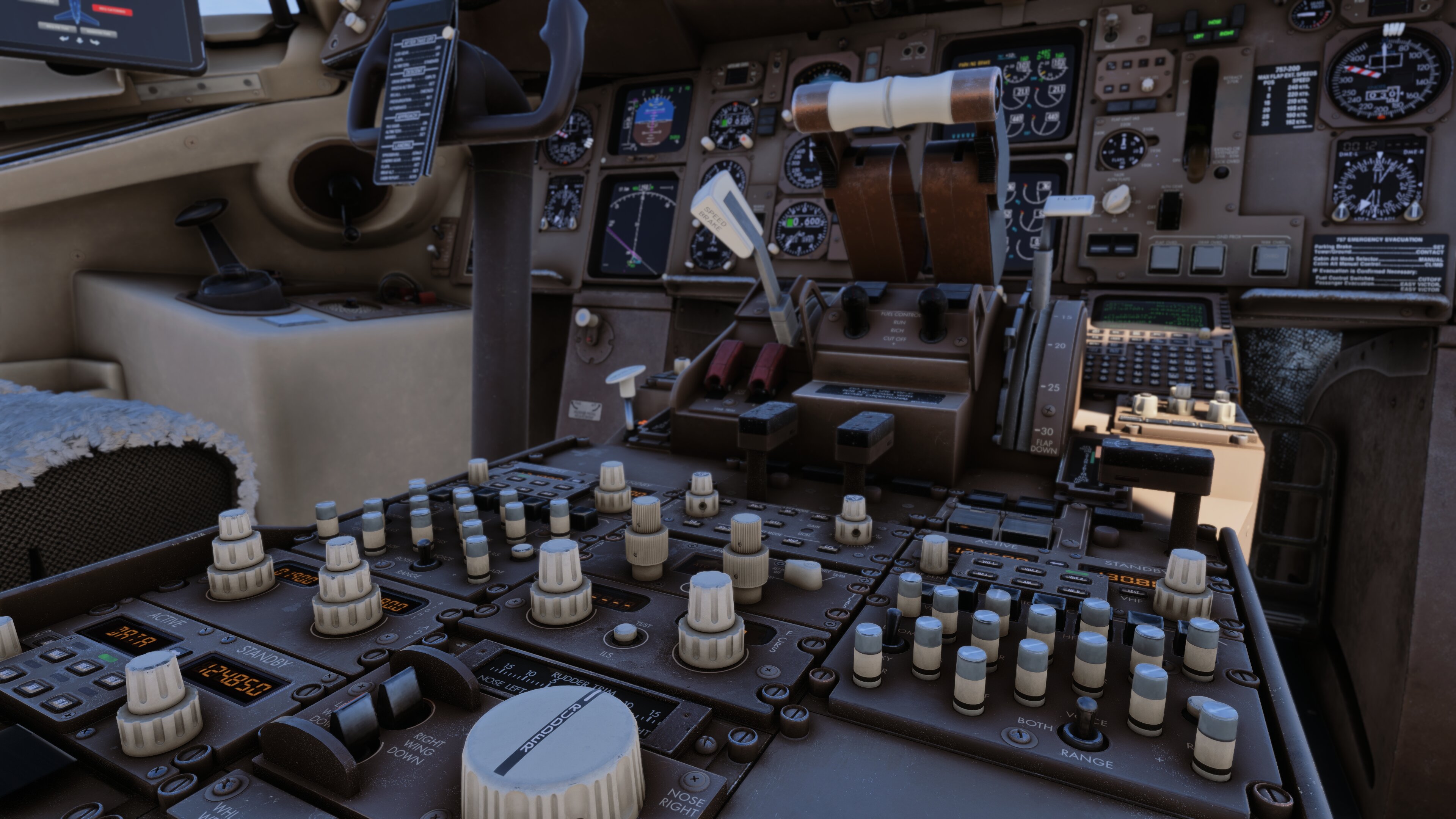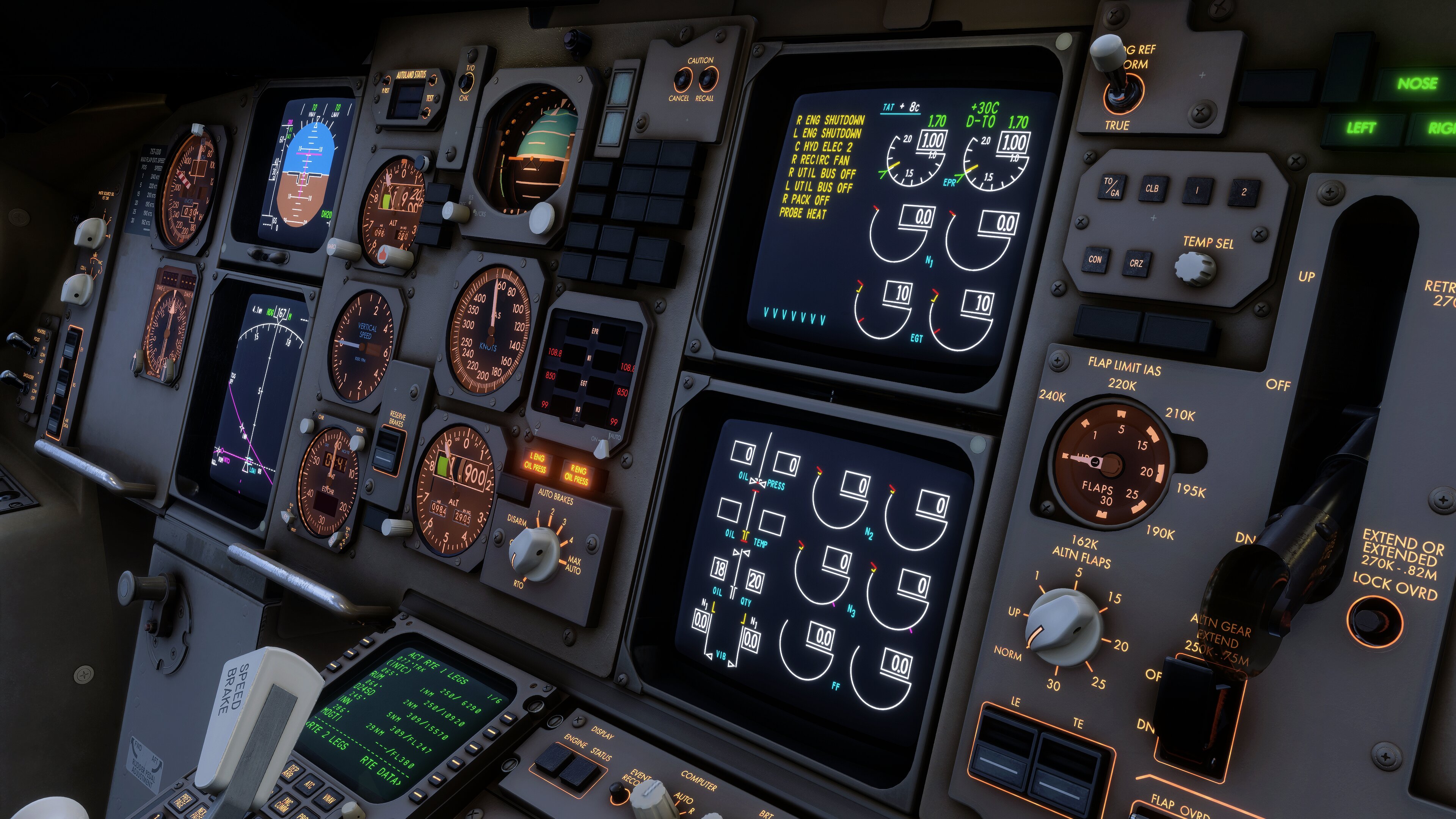


The newly shared document expands on Sky Blue Radio’s earlier BlueBird 757 development coverage and confirms that BlueBird is modeling more than 500 circuit breakers, over 300 EICAS messages, custom flight-management and autopilot systems, interactive cabin communications and both major Boeing 757 engine families.
BlueBird also clarified that a comprehensive failure suite will be added after release. However, the aircraft’s systems are already being built with component faults, degraded operation and future failure integration in mind.
More Than 500 Circuit Breakers
The Boeing 757’s electrical system will include every major aircraft bus, along with accurately modeled relays, contactors, power transfers and load-shedding logic.
BlueBird says more than 500 circuit breakers have been mapped to their correct electrical buses. More than 200 are expected to function at launch, with additional breakers becoming operational over time.
A live electrical-system schematic will also be available through the aircraft’s electronic flight bag, allowing pilots to watch buses, switches and power sources respond as the aircraft configuration changes.
BlueBird’s official public feature breakdown also confirms that the developer is aiming for interconnected system behavior rather than simple on-and-off switch simulation.
Fully Custom Autopilot and Flight Management
The BlueBird 757 will use a fully custom-coded autopilot built from the ground up.
All three flight-control computers are being simulated, including their associated electrohydraulic servos and control laws. The system will also include custom automatic trim.
Planned capabilities include full LNAV and VNAV, RNAV legs, holding patterns, missed approaches, go-arounds and accurate autoland behavior.
The custom Pegasus-style flight management computer will include:
- INIT/REF, DEP/ARR and LEGS functions
- Climb, cruise and descent VNAV pages
- Holding and missed-approach logic
- Alternate-airport planning and DIVERT NOW
- Fuel predictions
- FIX pages
- Takeoff and approach reference pages
- Extended centerlines
- Navigation-data lookup
- Performance initialization
The FMC will support SimBrief and Navigraph integration, while Hoppie ACARS will provide digital clearance delivery and air-to-air messaging. BlueBird is also building hardware communication for CDU devices through platforms such as MobiFlight.
More Than 300 EICAS Messages
BlueBird says more than 300 EICAS messages have been simulated.
The aircraft will feature independent left and right EICAS systems, a modeled Warning Electronics Unit and custom logic for master warnings, cautions, bells, chimes, sirens and cockpit alerts.
Warning and caution inhibits will operate during appropriate phases of flight, while message timing and suppression logic will follow manufacturer specifications.
The aircraft’s displays are being custom-coded in C++, including the primary flight displays, navigation displays, EICAS screens and associated failure flags.
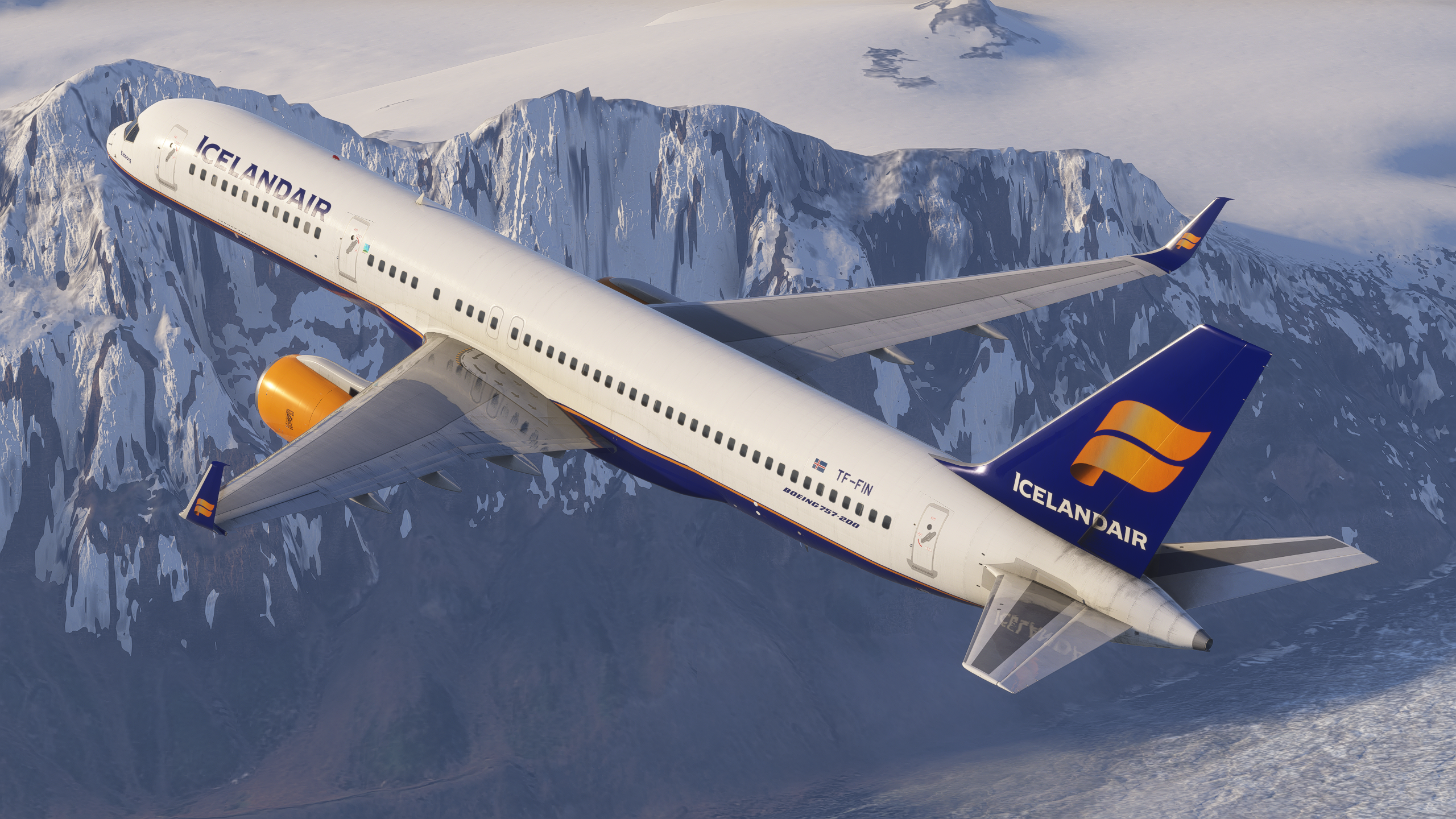
Cabin Temperature Will Respond to the Flight
Air conditioning will be more than a switch pilots turn on and forget.
Passenger count, outside temperature, wind, weather, open doors and pack effectiveness will all influence cabin conditions.
The air-conditioning packs will support automatic low- and high-flow modes, primary controllers and standby controllers. Cabin temperature will naturally trend toward outside conditions when packs are unavailable or doors remain open.
Flight attendants may contact the cockpit if temperatures become uncomfortable, making cabin management an active part of airline operations.
Interactive Flight Attendants and Ground Crew
The aircraft will include a custom cabin-interphone and communication system connecting the cockpit with three separate flight-attendant zones.
Cabin crew may call the flight deck to report uncomfortable temperatures, cabin readiness, passenger oxygen deployment or pressurization problems.
They can also respond to departure chimes, report that the cabin is secure and remind pilots to activate the seat-belt sign during descent.
Ground calls will also be modeled. The ground crew may disconnect external power based on boarding status, EFB settings and SimBrief flight information.
Automatic cabin announcements, captain announcements and passenger chatter will be included, although users will be able to disable them.
Hydraulic Systems Will Affect the Flight Controls
BlueBird is connecting the aircraft’s flight controls directly to its custom hydraulic simulation.
The left, center and right hydraulic systems will include pumps, valves, lines, fluid quantities and pressure behavior. Control-surface movement will affect hydraulic pressure, while a loss of pressure will influence how those surfaces respond.
The flight-control simulation includes:
- Custom elevator trim
- Ground spoilers and air spoilers
- Spoilerons
- Automatic speedbrakes
- Independent leading-edge and trailing-edge flaps
- Rudder-ratio logic
- Weather-vanning control surfaces
- Real-world flap movement times
- Accurate hydraulic interaction
The ram-air turbine will also be simulated and will provide pressure to the correct aircraft systems when deployed.
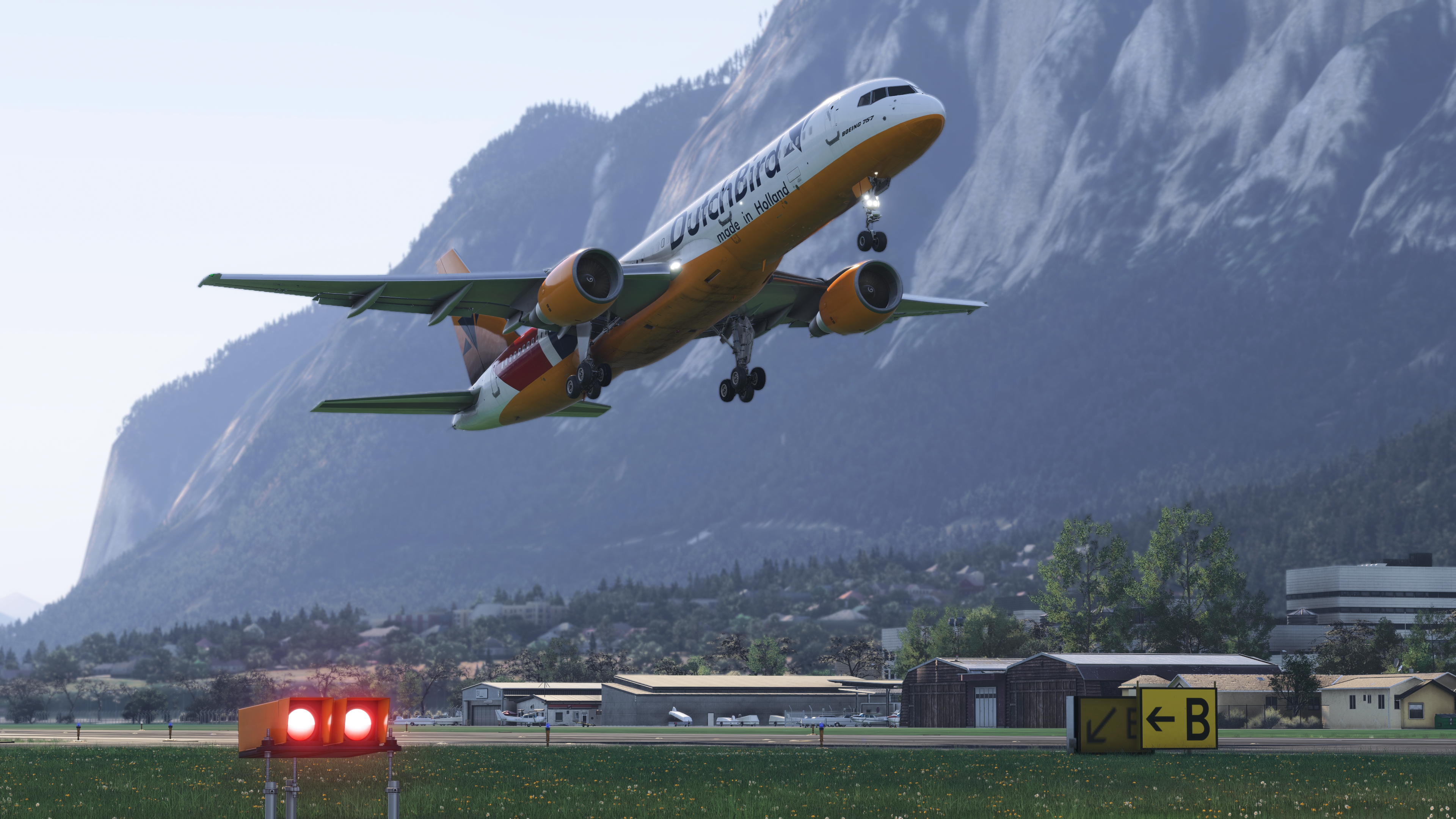
Custom Braking and Landing Gear
The Boeing 757’s landing gear will include alternate extension, hydraulic nosewheel steering and custom braking behavior.
Brake temperature will affect braking efficiency, while a modeled brake-temperature monitoring system will show how heat builds during taxi, landing and rejected takeoffs.
BlueBird’s custom autobrake system will target a selected deceleration rate rather than applying a fixed amount of brake pressure. That allows the aircraft to compensate for aerodynamic drag and runway conditions while attempting to maintain a consistent stopping profile.
Ice, Rain and an Unusual Temperature-Probe Detail
Probe heat, engine anti-ice, wing anti-ice and window heating will all depend on their correct electrical and pneumatic sources.
BlueBird has also modeled an unusual Boeing 757 temperature-probe scenario.
On warm days with little wind, the total-air-temperature probe may become warmer than the actual outside temperature if bleed-air aspiration is unavailable. Because the FMC uses that temperature for takeoff calculations, pilots may find that assumed-temperature derates become limited.
Ice can also build on windshield-wiper blades and associated components, providing visible indications that icing conditions are present.
Oxygen That Can Actually Run Out
The crew oxygen bottle will behave like a working reservoir.
Testing the masks or wearing them will consume oxygen. Temperature around the bottle will influence its indicated quantity, while crew and observer numbers will affect overall usage.
The masks will support test functions, emergency-pressure modes and selectable oxygen-delivery settings.
The system has already been designed to account for low quantities, leaks, empty bottles and closed valves.
Detailed Pressurization and Pneumatics
The pressurization system will include two automatic modes and one manual mode.
Automatic scheduling will cover ground, takeoff, climb, cruise, descent and landing. Outflow-valve movement, duct pressure, bleed-air temperature and pack operation will respond dynamically throughout the flight.
Pneumatic duct temperatures will change with ambient conditions, while alternate supply fans can take over if primary fans fail.
Anti-ice, air conditioning and pressurization will all draw from the same interconnected pneumatic architecture.
Rolls-Royce and Pratt & Whitney Engines
BlueBird will include both major Boeing 757 engine families:
- Rolls-Royce RB211-535E
- Pratt & Whitney PW2000
Each engine will receive separate performance tuning, exhaust-gas-temperature modeling, windmilling behavior and custom electronic engine controls.
The sound package will also distinguish between the two engines using hours of real-world recordings.
Engine audio will change depending on airspeed, temperature, altitude, viewing angle and proximity to the ground. Sounds heard from the cabin will differ from those heard during an exterior flyby.
More Than 450 Cockpit Sound Samples
BlueBird recorded more than 450 cockpit sound samples using professional equipment, with hundreds more taken from the cabin and exterior.
The package includes sounds from:
- Fuel and hydraulic pumps
- Air-conditioning packs
- Cooling and recirculation fans
- Electrical relays and contactors
- TCAS alerts
- EGPWS warnings and landing callouts
- The auxiliary power unit
- Cabin crew and passengers
- Turbulence, braking and structural strain
Electrical-system frequency will even influence the pitch of certain aircraft sounds.
A Deep Electronic Flight Bag
The electronic flight bag will include cockpit presets for cold and dark, turnaround, taxi, takeoff, cruise, approach and final approach.
Additional pages will handle:
- Fueling and defueling
- Weight and balance
- Ground services
- Doors and cabin lighting
- Maintenance
- ACARS
- Weather and NOTAMs
- Charts and maps
- SimBrief data
- Aircraft settings
- AIRAC database management
Interactive synoptic pages will display live electrical, fuel, hydraulic and pneumatic information, including valve positions, pressures, quantities and pump states.
The maintenance page will also provide brake-temperature data and ram-air-turbine controls.
More Than 100,000 Rivets and 1,000 Cockpit Animations
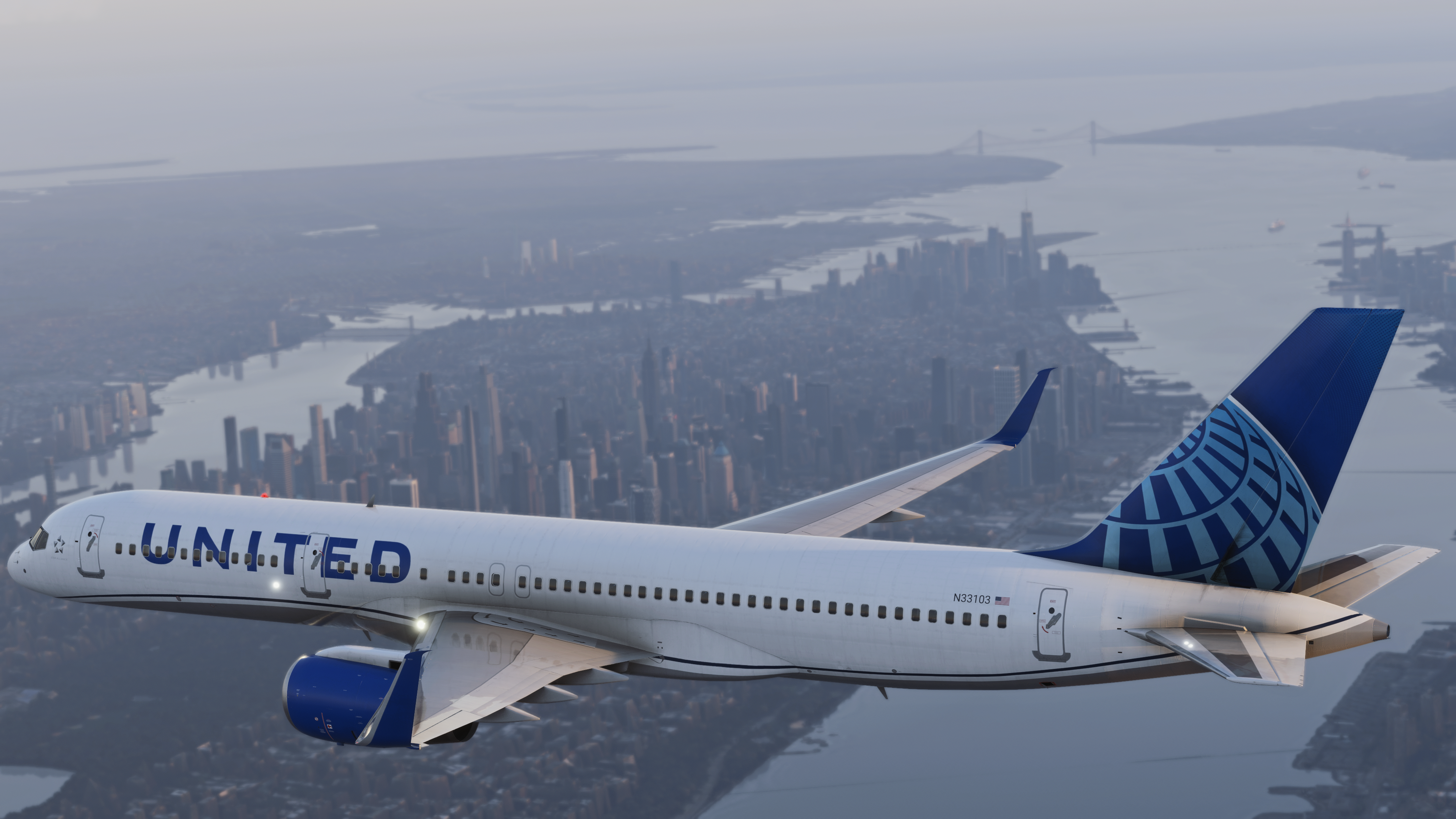
BlueBird says the exterior model contains more than 100,000 modeled rivets and screws, along with hundreds of decals and panel lines.
The aircraft will include animated landing-gear compression, gear bogies, the ram-air turbine, control surfaces and the pressurization outflow valve.
Inside the cockpit, more than 1,000 animations cover switches, buttons, knobs, windows and shades.
Two passenger-cabin layouts are planned for the 757-200, based on different emergency-exit configurations.
The flight model has been tested by Boeing 757 pilots and will account for performance differences between standard-wing and winglet-equipped aircraft.
Pilots following other high-fidelity airliner developments can also read Sky Blue Radio’s coverage of the VECTOR 787-9 entering alpha testing.
Comprehensive Failure Suite Coming After Release
BlueBird’s clarification regarding failures is important.
The full user-facing failure suite will not be included at initial release. It will be added afterward.
However, the aircraft is not being designed as a perfectly healthy 757 that will receive superficial warning messages later.
Many systems already contain logic for failed controllers, detector faults, oxygen leaks, electrical problems, fire detection and degraded component operation.
Building that logic into the aircraft now should allow the future failure suite to trigger realistic system reactions rather than simply illuminating lights on the overhead panel.
BlueBird Sets a High Bar for Its Boeing 757
The new feature list presents an aircraft aimed at pilots who want to understand how the Boeing 757 works, not simply guide it from departureto arrival.
The headline numbers are substantial: more than 500 mapped circuit breakers, over 300 EICAS messages, more than 450 cockpit sound samples, 100,000 exterior fasteners and 1,000 cockpit animations.
The more important detail is how those systems are intended to interact.
Passenger count affects cabin temperature. Electrical buses affect warnings and displays. Hydraulic pressure affects control surfaces. Pneumatics influence air conditioning, pressurization and anti-ice.
That interconnected design could prove more important than any single feature when the BlueBird 757 finally reaches virtual airline fleets.
BlueBird says more features will be added before release, with the comprehensive failure suite following afterward.
The current seven-page list makes one thing clear: BlueBird is not building a shallow Boeing 757.