

Virtual Controller Supply, or VCS, is a new hardware brand focused on realistic air traffic control equipment for VATSIM controllers, simulation environments, training and research applications.
The project quietly began earlier this year, with VCS shipping what it describes as the first keyboard purpose-built for controlling radar facilities on VATSIM and other online ATC networks on March 24, 2026.
Now, Flight Simulation Association is formally introducing the project and outlining plans to expand its range of controller hardware.
Bringing Real ATC Hardware to the Virtual Radar Room
Home flight simulation has spent decades chasing increasingly realistic cockpits.
Pilots can purchase replica throttles, yokes, sidesticks, radios, autopilot panels and even complete airliner flight decks.
The controller side of the hobby has traditionally received considerably less hardware attention.
Virtual Controller Supply is attempting to change that.
The company is developing equipment intended to replicate workflows used by real-world air traffic controllers while remaining compatible with online networks such as VATSIM.
Current products include:
- ATC headsets
- Push-to-talk devices
- Flight progress strips
- Strip bays
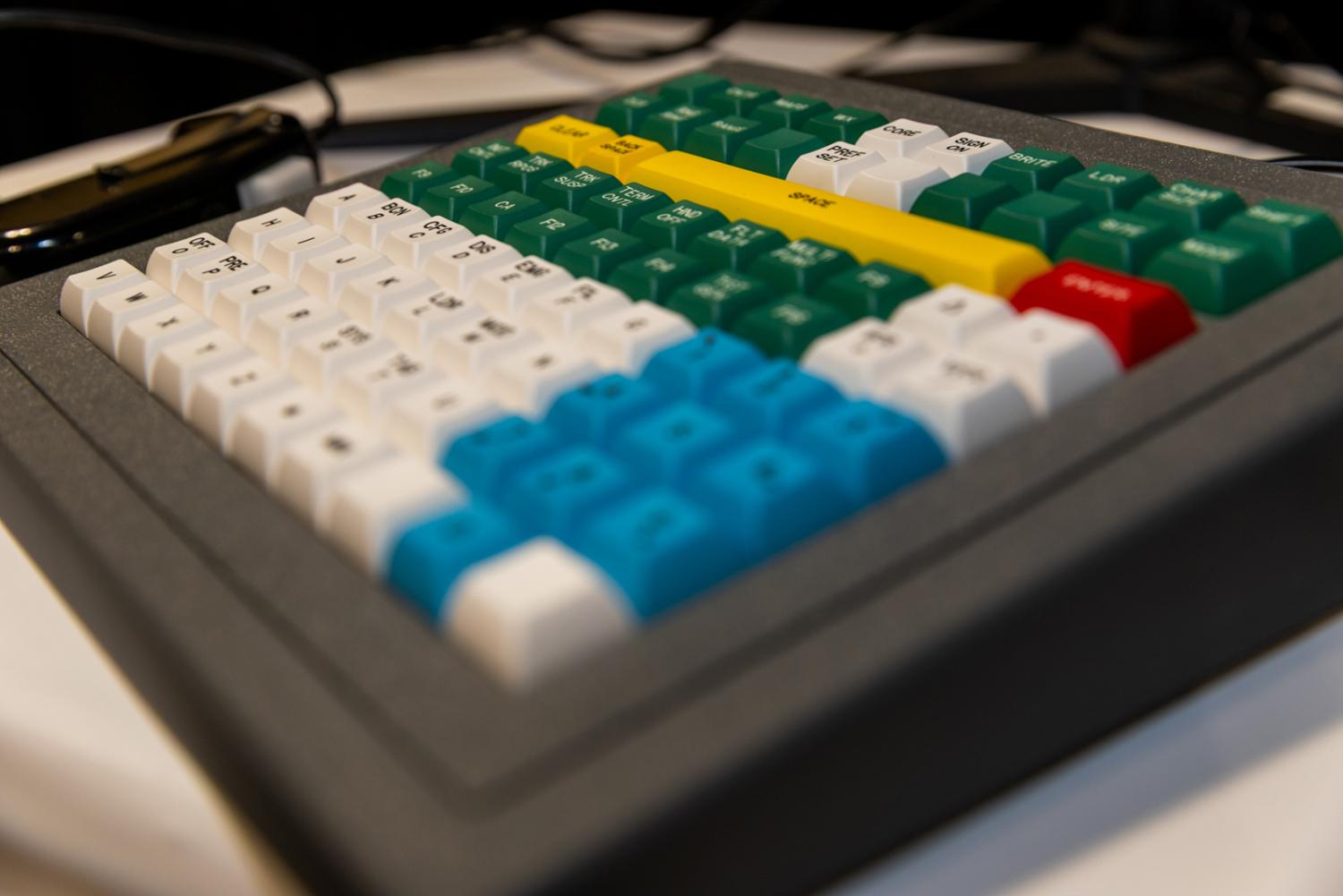
- A replica STARS keyboard designed for radar controlling
The company is also developing a prototype ERAM keyboard, modeled after the equipment used at FAA Air Route Traffic Control Centers.
A Replica STARS Keyboard
The centerpiece of the current VCS lineup is its plug-and-play replica of the keyboard used with the FAA's Standard Terminal Automation Replacement System, better known as STARS.
STARS is used in real-world FAA terminal radar facilities, including TRACON environments.
Virtual controllers using VATSIM's modern radar clients often work with commands inspired by those same systems, but standard computer keyboards were never designed around that workflow.
Commands can be scattered across a conventional QWERTY layout, requiring controllers to memorize combinations that bear little resemblance to the physical equipment used in an actual radar room.
VCS designed its keyboard to place controller functions where users would expect to find them on a dedicated STARS keyboard.
The company says the result provides both improved usability and greater immersion.
One VATSIM controller quoted by VCS said the dedicated layout makes STARS commands easier to remember because frequently used functions are located together. The controller also reported that the keyboard works seamlessly with VATSIM's CRC software and has become a permanent part of their TRACON and tower-controlling setup.
Apparently one was not enough. The controller owns multiple VCS STARS keyboards.
That might be the ATC equivalent of discovering that flight simmers rarely stop at one throttle quadrant.
Designed for CRC and Online ATC
The VCS hardware is being aimed particularly at controllers using VATSIM, where increasingly sophisticated software has recreated many aspects of real-world ATC operations.
The introduction of the VATSIM Radar Client, commonly known as CRC, has helped bring more consistent and modern radar tools to controllers.
Adding dedicated hardware introduces another level of realism.
Instead of searching for specialized commands on a general-purpose keyboard, controllers can begin developing muscle memory around a layout designed specifically for radar operations.
That may be particularly useful for controllers working busy terminal positions where commands are entered rapidly while aircraft are being identified, handed off, assigned headings and altitudes, and sequenced toward airports.
Flight Strips Are Part of the Plan
Virtual Controller Supply is not concentrating solely on electronic equipment.
The company also offers physical flight progress strips and strip bays.
Paper flight strips were once an unmistakable feature of air traffic control facilities, allowing controllers to keep a physical record of aircraft, clearances and sequence information.
While modern ATC facilities increasingly rely on electronic flight data, physical strips remain familiar to generations of controllers and are still relevant in certain environments.
For simulator users building dedicated tower or radar workstations, adding strips and bays can transform a desk covered in monitors into something much closer to an actual controller position.
Headsets and Push-to-Talk Equipment
VCS is also offering headsets and dedicated push-to-talk devices.
Voice communications sit at the center of online ATC networks, making radio equipment one of the most important parts of a controller's setup.
A dedicated PTT device allows users to place the transmission control somewhere natural rather than relying on an arbitrary keyboard key or mouse button.
Combined with a controller-style headset, the idea is to make communications feel less like talking into a gaming computer and more like operating an ATC position.
ERAM Keyboard Is Already in Development
Virtual Controller Supply's next major hardware project could take the concept beyond terminal radar control.
The company says it is currently developing a prototype keyboard modeled after ERAM, the En Route Automation Modernization system used at FAA Air Route Traffic Control Centers.
Where STARS is associated primarily with terminal radar operations, ERAM supports controllers handling high-altitude enroute traffic across the United States.
A dedicated ERAM-style keyboard could therefore be particularly interesting to VATSIM controllers working Center positions.
VCS says other frequently requested controller accessories are also being considered.
A Different Side of Flight Simulation Hardware
The timing is interesting.
Flight-simulation hardware has become an increasingly competitive market, with manufacturers producing everything from inexpensive desktop controls to professional-grade cockpit components.
Yet nearly all of that development has focused on the pilot.
Online networks depend on another group of volunteers sitting in front of entirely different screens, learning entirely different procedures and occasionally attempting to fit 27 aircraft into the same arrival stream without anyone noticing the coffee has gone cold.
Virtual Controller Supply is betting that those controllers deserve purpose-built hardware too.
It is a relatively small corner of the flight-simulation industry, but one that has historically relied heavily on ordinary computer peripherals and home-built solutions.
If VCS can successfully replicate real controller workflows at an accessible level, dedicated ATC hardware could become another growing category within the simulation ecosystem.
More Than Just VATSIM
Although VATSIM is an obvious audience, Flight Simulation Association says Virtual Controller Supply hardware is also intended for simulation, training and research settings.
That opens possibilities beyond hobbyists.
Dedicated ATC hardware could be useful for aviation education programs, university research projects, controller familiarization and other environments where reproducing the physical workflow of an ATC facility is valuable without installing full professional training equipment.
For now, however, virtual controllers appear to be the project's natural first audience.
Virtual Controller Supply Is Available Now
Virtual Controller Supply is already operating, with its current lineup of STARS keyboards, flight strips, strip bays, headsets and push-to-talk accessories available through the company's website.
The ERAM keyboard remains under development, with additional controller accessories planned for the future.
For years, serious home flight simmers have been able to surround themselves with enough switches, screens and control panels to make a spare bedroom look suspiciously like a Boeing cockpit.
Now the controller telling them to "descend and maintain five thousand" may finally have a hardware collection of their own.