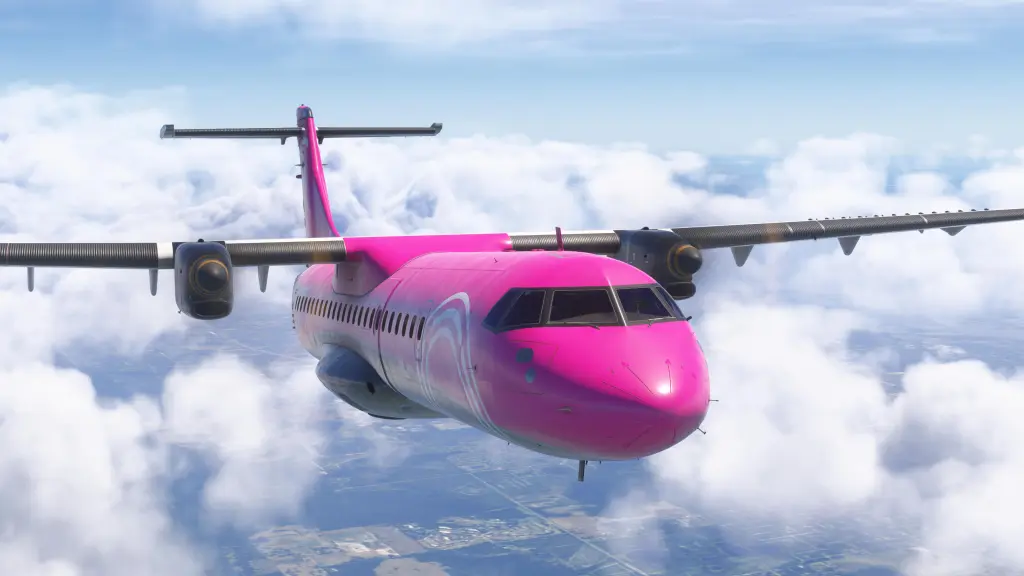


The update does not reinvent the ATR, but it tackles a long list of issues ranging from engine performance and VNAV behavior to Career Mode problems, route planning, ground equipment, cockpit visuals and flight-director logic. Microsoft highlighted the ATR specifically in its August 20 Weekly Briefing as one of the aircraft receiving additional work in AAU_05.
Career Mode Gets Several Important Fixes
The newest ATR build, version 1.1.40, focuses heavily on Career Mode.
Microsoft says the update fixes a problem where the aircraft could load with an incorrect negative trim setting when users skipped directly to takeoff. It also addresses situations where engines could shut down, or fail to start at all, when skipping ahead to later phases of a Career Mode flight.
Those may sound like relatively small items, but they can completely derail a flight before it begins.
If you skip to taxi and discover your engine has apparently decided it would rather remain home, the realism discussion becomes somewhat academic.
Engine Performance Has Been Retuned
One of the more meaningful changes actually arrived in the sequence of ATR updates leading into AAU_05.
Microsoft says the ATR 42-600 engine was previously producing too much power and has now been retuned to better match performance figures from the aircraft’s manuals.
Reverse thrust has also been increased across the ATR variants to better match observed real-world performance.
For pilots who closely monitor takeoff, climb and landing behavior, those changes are more significant than a simple visual fix.
Aircraft performance is one of the areas where relatively small inaccuracies can become obvious over an entire flight.
Too much power can distort climb rates, fuel burn, cruise behavior and approach planning.
VNAV Continues to Improve
The ATR’s VNAV system has also received more work.
AAU_05 includes an improved VNAV path calculation, although the developers note that additional work is still planned.
Another fix addresses VNAV failing to arm correctly during the cruise phase.
The update also improves LNAV behavior when passing over waypoints and fixes an issue involving Radius-to-Fix legs not appearing correctly on the navigation display.
Route drawing has also been improved.
These are particularly important changes for airline-style operations because the ATR relies heavily on managed lateral and vertical navigation during scheduled flying.
Route Planner and SimBrief Integration Get Attention
Microsoft also fixed several flight-planning issues.
The MSFS 2024 EFB Route Planner import has been corrected, and another issue affecting route imports when an arrival airport already had an approach assigned has also been addressed.
The EFB now makes the distinction between importing an MSFS 2024 flight plan and importing a SimBrief operational flight plan clearer.
That should reduce some of the head-scratching that can happen when the simulator, EFB and aircraft FMS all appear to have slightly different ideas about where the airplane is supposed to go.
The Flight Director Gets Several Fixes
The flight director was another target.
Microsoft says it fixed a condition where the FD could remain inactive with the pitch bar sitting at zero degrees.
Another fix prevents the flight director from incorrectly reverting to standby when the autopilot is disengaged while the aircraft is on the ground.
The update also adds CAT 1 and CAT 2 indications to the Flight Mode Annunciator.
These changes are relatively technical, but they matter in an aircraft where pilots depend heavily on the FMA to understand what the autoflight system is actually doing.
Better Ground Services
The ATR now has improved support for ground equipment as well.
The update adds a fuel hose and ground-power cable and introduces support for the simulator’s ground power unit.
Earlier issues where those cables could appear buried or submerged beneath the ground have also been fixed.
Door animations and interactions have received additional work too.
These details are particularly relevant in MSFS 2024, where walkaround operations and interactive ground servicing are a much larger part of the simulator than they were in MSFS 2020.
Propeller Brake Behavior Gets More Work
The ATR’s propeller brake system has long been one of the aircraft’s more distinctive features.
The latest update includes a workaround related to fuel consumption while using the propeller brake.
Microsoft also fixed a problem where the right engine’s Interstage Turbine Temperature could exceed 680 degrees Celsius while the prop brake was operating.
Residual ITT is now simulated after engine shutdown as well.
Those changes help make engine operation feel less binary and more like a turbine aircraft where temperatures and mechanical conditions continue evolving even after the condition levers move.
Electrical and System Logic Receive Corrections
Several smaller systems issues have been cleaned up.
Generator switch logic has been corrected.
The GPWS fault light should now illuminate only when appropriate.
The landing-elevation display has been fixed, along with the NAMS panel outflow-light state.
Air-conditioning behavior has also been adjusted so the system correctly recognizes the ground crossfeed valve.
Microsoft additionally removed incorrect references to N2 from the ATR engine configuration files, noting that they were not applicable to the turboprop simulation.
Cockpit Visuals Also Get a Cleanup
AAU_05 addresses several visual issues inside the ATR cockpit.
Among the fixes:
- Display glow appearing even when electrical power was off
- Backlighting problems
- Black areas appearing on display units
- STEEP APPR button artifacts in the ATR 72 cockpit
- Incorrect or missing lighting on the ice probe
- Floating seatbelts
- Incorrect markings on fuel valve and crossfeed buttons
Microsoft also fixed exterior lights that could flicker after leaving slew mode and addressed several Level-of-Detail issues.
None of those changes alone transforms the aircraft, but together they remove many of the small visual oddities that can chip away at immersion.
The EFB Is Becoming More Useful
The ATR’s EFB continues to receive quality-of-life improvements.
Users can now view the simulator rate directly in the EFB status bar and change the sim rate from the maintenance page.
Button feedback has also been improved, making it clearer when a control is selected or disabled.
Microsoft also added a BRACE ACCU PRESS warning to the EFB aircraft page.
Cargo Career Support Expands
The ATR 72-600F now supports the Medium Cargo Transport aircraft specialization in Career Mode.
That gives players using the freighter variant another reason to bring the ATR into MSFS 2024’s career ecosystem instead of limiting it to free-flight airline operations.
AAU_05 Is Bigger Than Just the ATR
Aircraft & Avionics Update 05 also upgrades several other Microsoft aircraft to the native MSFS 2024 framework.
The update includes substantial work on:
- Bell 47J Ranger
- Boeing 307 Stratoliner
- Curtiss C-46 Commando
- Ford 4-AT Trimotor
Those aircraft received broader native-framework upgrades, while the ATR portion of AAU_05 focuses mainly on refining and repairing the existing Expert Series aircraft.
The ATR Keeps Getting Better, One Layer at a Time
The ATR 42/72-600 has been one of Microsoft Flight Simulator’s more ambitious first-party aircraft projects.
It occupies an interesting middle ground between the simulator’s default aircraft and the highly detailed airliners produced by specialist third-party developers.
AAU_05 shows that Microsoft is still actively refining that aircraft rather than treating it as finished and moving on.
The changes are not flashy.
There is no new variant announcement, dramatic visual overhaul or enormous feature reveal.
Instead, this update attacks the kind of details that matter after hundreds of hours of real use: flight-director quirks, engine performance, VNAV behavior, route importing, ground services, Career Mode compatibility and dozens of smaller system inconsistencies.
For ATR pilots, that may ultimately matter more than another shiny feature.
The airplane is not becoming a different product.
It is becoming a better version of the one already sitting in the virtual hangar.