

Dream Air Goes Public in Chicago
Sim Gaming Expo 2026 was held September 18–20 at the Renaissance Schaumburg Convention Center outside Chicago.
Visitors could test the Dream Air at the Pimax booth and in a complete simulator installation presented at the MOZA Racing booth. The public demonstrations gave potential customers a better idea of how the headset performs during actual simulator use instead of relying solely on specifications, promotional videos and online reviews.
Three areas reportedly attracted the most attention: weight, image clarity and heat management.
Those are particularly important considerations for flight simmers, who may remain inside a headset for several hours while completing a long flight. A headset can have excellent displays, but that becomes much less impressive when it starts feeling like a bowling ball strapped to the pilot’s forehead halfway across the Atlantic.
High Resolution in a Lightweight Package
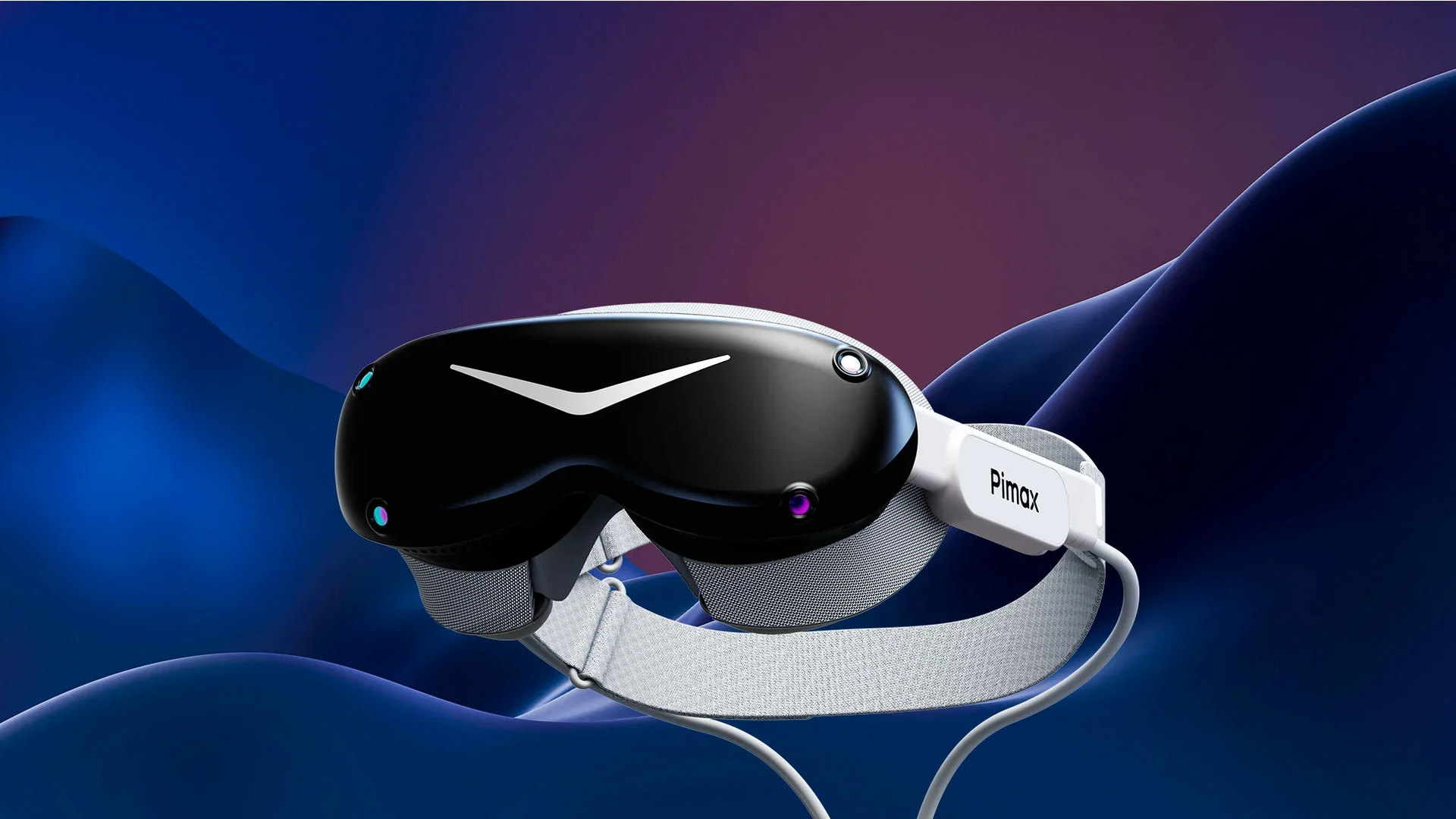
The Pimax Dream Air uses Sony Micro-OLED displays offering a resolution of 3,840 by 3,552 pixels per eye. The headset supports refresh rates of up to 90 Hz and provides an approximately 110-degree horizontal field of view.
Pimax combines the displays with its ConcaveView pancake-lens system. The company says this arrangement delivers a wide visual sweet spot, strong contrast and sharp text while allowing the headset to remain considerably smaller than many high-end PC virtual-reality systems.
The headset also includes eye tracking and automatic interpupillary-distance adjustment. Eye tracking can support dynamic foveated rendering, which concentrates rendering resources around the area where the pilot is looking while reducing detail in peripheral areas.
That technology could be particularly valuable in Microsoft Flight Simulator, where maintaining high image quality across two extremely high-resolution displays places a substantial workload on the graphics card.
At approximately 170 grams without its cable, the Dream Air is significantly lighter than many traditional PCVR headsets. The compact design resembles a large pair of goggles more than the bulky head-mounted displays flight simmers have grown accustomed to wearing.
Designed for Demanding PCVR Applications
The Dream Air is a tethered PCVR headset and requires a powerful gaming computer. Its DisplayPort connection avoids the image compression that can accompany some streamed or wireless VR solutions, but it also means pilots remain physically connected to the computer.
Two versions are available.
The Lighthouse model is designed for users who already have compatible SteamVR base stations and controllers. The more expensive SLAM edition adds inside-out tracking cameras and controllers, allowing the headset to operate without external base stations.
For flight simulation, controller tracking may be less important than it would be in room-scale VR. Many pilots primarily use a yoke, joystick, throttle quadrant, rudder pedals and mouse while seated in the cockpit.
That makes flight simulation a potentially strong use case for the Dream Air. The headset’s light weight could reduce fatigue during longer sessions, while the high-resolution panels should make cockpit labels, navigation displays and distant runway details easier to read.
Sky Blue Radio previously examined how utilities such as the MSFS Performance Manager help pilots track frame rates, stutters and VRAM usage. That type of performance monitoring could prove useful with a headset pushing more than 27 million combined display pixels.
Impressive Hardware Comes with Tradeoffs
The Dream Air occupies the premium end of the PCVR market. Pricing begins around $1,999 for the Lighthouse configuration, while the SLAM version with inside-out tracking and controllers is listed at approximately $2,299.
Independent reviews have generally praised its display clarity, contrast, color reproduction and unusually low weight. However, reviewers have also raised concerns about software consistency, controller tracking and the demanding computer hardware needed to drive the headset effectively.
Users may need to adjust resolution scaling, foveated rendering and simulator graphics settings to maintain smooth performance. Even a powerful gaming computer can struggle when asked to render Microsoft Flight Simulator at extremely high resolution twice—once for each eye.
Microsoft has continued improving VR support through simulator updates. Sky Blue Radio’s coverage of Microsoft Flight Simulator 2024 Sim Update 5 highlighted several performance, stability and virtual-reality improvements introduced to the platform.
The Chicago impressions reported by MSFS Addons were produced as sponsored coverage, making it important to distinguish the demonstrated specifications from independent long-term testing. Potential buyers should review hardware requirements, return policies and compatibility carefully before committing to a headset in this price range.
A Premium Option for Serious VR Pilots
The Dream Air is unlikely to become an entry-level VR headset. Its price and hardware demands clearly place it in enthusiast territory.
For dedicated flight simmers, however, the combination of high-resolution Micro-OLED displays, eye tracking, DisplayPort connectivity and a dramatically lighter form factor is intriguing. Comfort and cockpit readability remain two of the biggest obstacles facing pilots who want to spend extended periods flying in virtual reality.
The Dream Air attempts to address both.
Whether that combination justifies a price approaching the cost of an entire high-end gaming computer will depend on the pilot, the simulator and the depth of the aviation budget.
The Pimax Dream Air is available through the manufacturer’s website in Lighthouse and inside-out-tracking configurations.