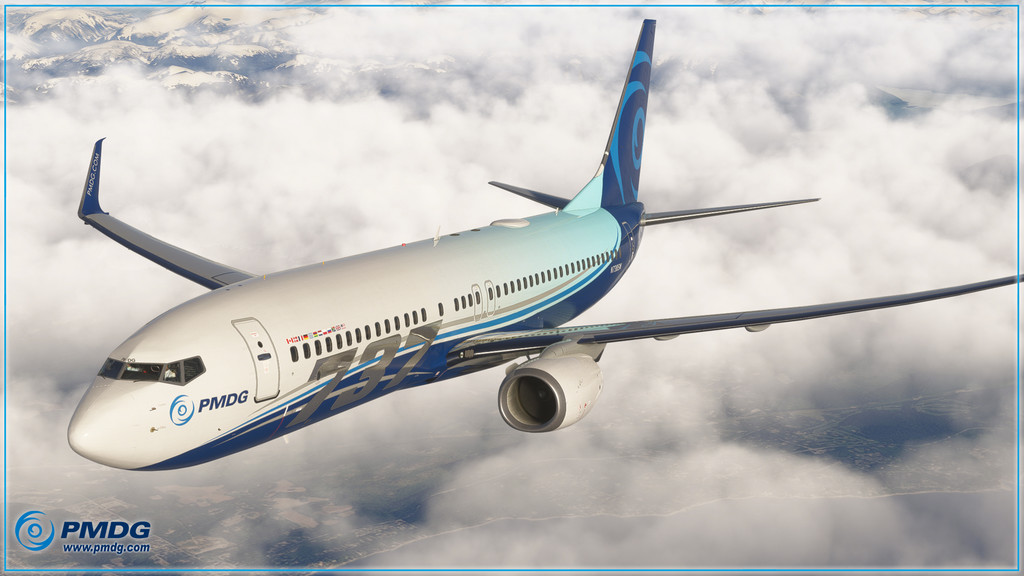


PMDG founder Robert Randazzo says the time spent stabilizing the 737 and 777 has negatively affected the company’s Boeing 747 development schedule, helping explain why public updates on the long-awaited Queen of the Skies have been relatively sparse.
737 and 777 Rebuilt Against the Latest SDK
In PMDG’s August 25 development briefing, Randazzo explained that the company has completely rebuilt its current 737 and 777 products using the latest Microsoft Flight Simulator SDK.
The goal is improved compatibility with Sim Update 6, along with better overall stability and fewer crashes involving WASM-based aircraft systems.
WASM, or WebAssembly, is used extensively by complex MSFS add-ons to run custom aircraft systems and code inside the simulator.
When it works, it allows developers to build aircraft with far more depth than the simulator’s basic systems alone would support.
When it does not work, it can turn a carefully planned eight-hour flight into an unexpected desktop wallpaper inspection.
Stability Remains a Major Focus
PMDG has been chasing WASM-related instability for months.
The company previously discussed crash investigations affecting multiple aircraft, including the 737, 777 and DC-6, while also working with other developers and Microsoft to better understand where the failures originate.
The latest rebuild is another attempt to reduce those problems by bringing the product line fully in line with the newest SDK environment.
PMDG is not claiming that every possible crash has been eliminated, but the company says the rebuilt versions should provide improved stability.
That distinction matters.
The underlying issue has never been as simple as one broken switch or one bad line of aircraft code. PMDG has repeatedly described the problem as something that can involve interactions between the simulator, WASM environment and complex third-party systems.
New Navdata “Force-Purge” Tool Added
The latest update also introduces a new way to deal with navigation database problems.
PMDG has added what Randazzo describes as a force-purge option for navdata.
The tool allows users to remove the current navigation database and return the aircraft to its original data state, which can help resolve situations where a newer navdata cycle refuses to install correctly or an existing database becomes corrupted.
That could prove useful for pilots using updated AIRAC data from external providers.
Navdata issues can create everything from missing procedures to broken route loading and inconsistent FMC behavior, so giving users a clean-reset option should make troubleshooting significantly easier.
777 LNAV and VNAV Get More Work
PMDG also used the update to correct additional LNAV and VNAV issues on the Boeing 777.
According to Randazzo, some of those problems were introduced while the development team was making changes connected to its broader anti-WASM-crash efforts.
That is one of the less glamorous realities of maintaining aircraft at this level of complexity.
Fixing one subsystem can expose unexpected behavior somewhere else.
The latest build therefore includes further corrections to lateral and vertical navigation logic as PMDG continues refining the 777 family.
The 747 Pays the Price
The most interesting part of the briefing may be what all this work has done to PMDG’s future roadmap.
Randazzo acknowledged that the time and resources being spent on the 737 and 777 have negatively affected the 747 development agenda.
That does not mean the 747 has stopped development.
It means the team responsible for bringing the aircraft forward has also been pulled into supporting products already in customer hands.
That helps explain why 747 updates have arrived in small pieces rather than through one large feature reveal.
PMDG has been building a completely new Boeing 747 family for Microsoft Flight Simulator 2024, and the project remains one of the company’s most anticipated releases.
The 747 Had Been Moving Toward Beta
Earlier this month, PMDG said the 747 was being prepared for beta testing, representing another step forward from the alpha-stage development discussed earlier in the summer.
That was an important milestone.
In PMDG’s development terminology, reaching alpha means the aircraft is far enough along to complete full flight assignments without major failures preventing normal testing.
Beta moves the project closer toward broader testing and polish.
The latest briefing does not suggest that progress has been erased.
Instead, it suggests the schedule has been stretched because resources have been diverted back toward stabilizing the 737 and 777.
PMDG Shares Another Tiny Piece of the 747
Randazzo did include another 747 preview in the briefing, although anyone hoping for a sweeping exterior reveal will need to keep waiting.
The image shows a close-up section of the aircraft’s wing.
According to PMDG, the model includes detailed rivets, panel seams, surface textures, corrosion-prevention sealant and signs of dirt and grime.
It is an extremely PMDG way to preview an airplane.
Other developers might show the whole aircraft banking over Seattle.
PMDG gives you seventeen square feet of wing and invites you to inspect the sealant.
Surface Detail Is Becoming Part of the Story
The wing preview does reveal something about the company’s visual ambitions for the 747.
PMDG is paying close attention to how the aircraft looks when viewed up close, including subtle differences in metal surfaces, panel joints and accumulated wear.
That matters more in MSFS 2024 than it might have in older simulators because the platform encourages users to spend more time outside the cockpit through walkaround and inspection features.
A texture that looks convincing from 50 feet away may not survive quite as gracefully when the user is standing six inches from the wing with the virtual equivalent of a magnifying glass.
A Whole 747 Family Is Planned
PMDG is not building a single 747 variant.
The company has previously outlined plans for a broader family covering multiple generations of the aircraft. Secondary reporting on PMDG’s roadmap describes the program as beginning with the familiar 747-400 and earlier variants, with additional versions planned later.
That makes the scale of the project significantly larger than simply recreating the 747-400 from earlier PMDG products.
The 747 family changed substantially across its lifetime.
Differences in engines, avionics, flight decks, systems, weights and aerodynamics mean a -100, -200, SP, -400 and -8 are not simply interchangeable visual models.
If PMDG follows through on the broader family strategy, the project could ultimately become one of its largest aircraft programs.
MSFS 2024 Is the Target Platform
The new 747 is being developed specifically for Microsoft Flight Simulator 2024.
That is notable because PMDG’s current product catalog still straddles both simulator generations in places.
Its 737 line is now available natively for MSFS 2024, while parts of the 777 lineup support both MSFS 2020 and 2024. PMDG’s own storefront currently lists dedicated MSFS 2024 versions of several 737 variants alongside dual-platform 777 products.
The 747 represents a cleaner break.
It is being built around the newer simulator rather than carrying the baggage of maintaining a parallel MSFS 2020 version.
Why the Rebuild Matters
It would be easy to look at this as maintenance work.
There is more to it than that.
Complex airliners increasingly live at the intersection of several rapidly changing technologies:
Microsoft Flight Simulator itself.
The SDK.
WASM.
Navigation databases.
Third-party tools.
Operating system updates.
External hardware.
Marketplace delivery systems.
A small change in one layer can cause unexpected behavior somewhere else.
By rebuilding the 737 and 777 against the latest SDK, PMDG is attempting to reset part of that foundation rather than continuing to stack fixes on top of older builds.
Existing Aircraft Come Before the Next One
There is also a broader development reality behind the delay.
Customers who already purchased the 737 and 777 expect those products to work reliably.
That means PMDG cannot simply move its entire development team onto the 747 while existing aircraft struggle with simulator changes.
Every hour spent chasing a WASM crash or fixing VNAV behavior is an hour not spent building the next 747 system.
That may be frustrating for people waiting for the Queen, but it also explains why development schedules for high-fidelity aircraft can move unpredictably.
The simulator underneath them does not stop changing just because another aircraft is in production.
No 747 Release Date Yet
PMDG still has not announced a release date for the new 747.
That remains the most important reality surrounding the program.
The aircraft is moving through development, has previously been described as approaching beta, and continues to receive visual previews.
But PMDG has not committed to a launch window.
Given the newly acknowledged impact of 737 and 777 support work, attaching a date to the 747 now would probably create more problems than it solves.
PMDG’s Priorities Are Clear
The August briefing paints a pretty straightforward picture.
PMDG is trying to stabilize the aircraft people are already flying before pushing harder toward the aircraft everyone is waiting for.
The 737 and 777 have been rebuilt against the latest SDK.
Navdata recovery has been improved.
The 777 has received more LNAV and VNAV work.
And the 747 is still progressing, even if that progress has been slowed by the support burden elsewhere.
For 747 fans, that means another period of patience.
For current PMDG customers, it means the company is putting significant effort into making the existing fleet behave more reliably under Sim Update 6.
And somewhere in the background, one extraordinarily detailed Boeing 747 wing continues accumulating rivets.