
One Aircraft Shared Between Multiple Pilots
Tailstrike is a free flight-simulation network built around persistent aircraft.
Every registration on the network represents a specific aircraft with its own location, fuel supply and flight history. When one pilot lands an aircraft, it remains at that airport until another pilot leases it and continues its journey.
The new TFDi Design integration takes that concept much further.
Pilots flying a supported MD-11 can now enter the cockpit exactly as the previous pilot left it. Switch positions, system configurations, display settings and other cockpit conditions can carry forward from one flight to the next.
Rather than loading an identical freshly prepared MD-11 every time, pilots are sharing an individual virtual airframe that develops its own operational history.
More Than 1,000 Cockpit States Can Carry Forward
The integration can preserve more than 1,000 individual MD-11 states, including the positions of switches, knobs and cockpit controls.
Tailstrike says hundreds of systems and thousands of data points are involved in creating the complete shared-aircraft experience.
That means proper preflight and post-flight procedures become considerably more important. A pilot cannot automatically assume that every switch is in its expected position or that the aircraft has been properly secured after its previous flight.
The previous crew may have left the aircraft perfectly configured—or created a cockpit scavenger hunt for whoever arrives next.
Tailstrike allows pilots to choose how much information they want to inherit:
- Complete synchronization with the previous MD-11 state
- Basic synchronization of fuel, radios, transponder and altimeter settings
- No aircraft-state synchronization
The basic option works across other aircraft on the Tailstrike network, while complete system synchronization is currently built specifically around the TFDi Design MD-11.
Extended Simulation Adds Persistent Wear and Failures
Owners of TFDi’s Extended Simulation package receive an even deeper level of persistence.
Individual MD-11 components can accumulate wear based on how the aircraft is operated. Failures, damage and maintenance conditions can then pass between pilots along with the aircraft’s cockpit configuration.
A hard landing could damage a tire, leaving the next pilot to discover the problem during the preflight inspection. Individual components can also deteriorate as the aircraft continues operating across multiple flights.
Pilots without Extended Simulation can still use the Tailstrike integration and inherit the previous cockpit configuration. However, they will not receive the advanced component-wear and failure features.
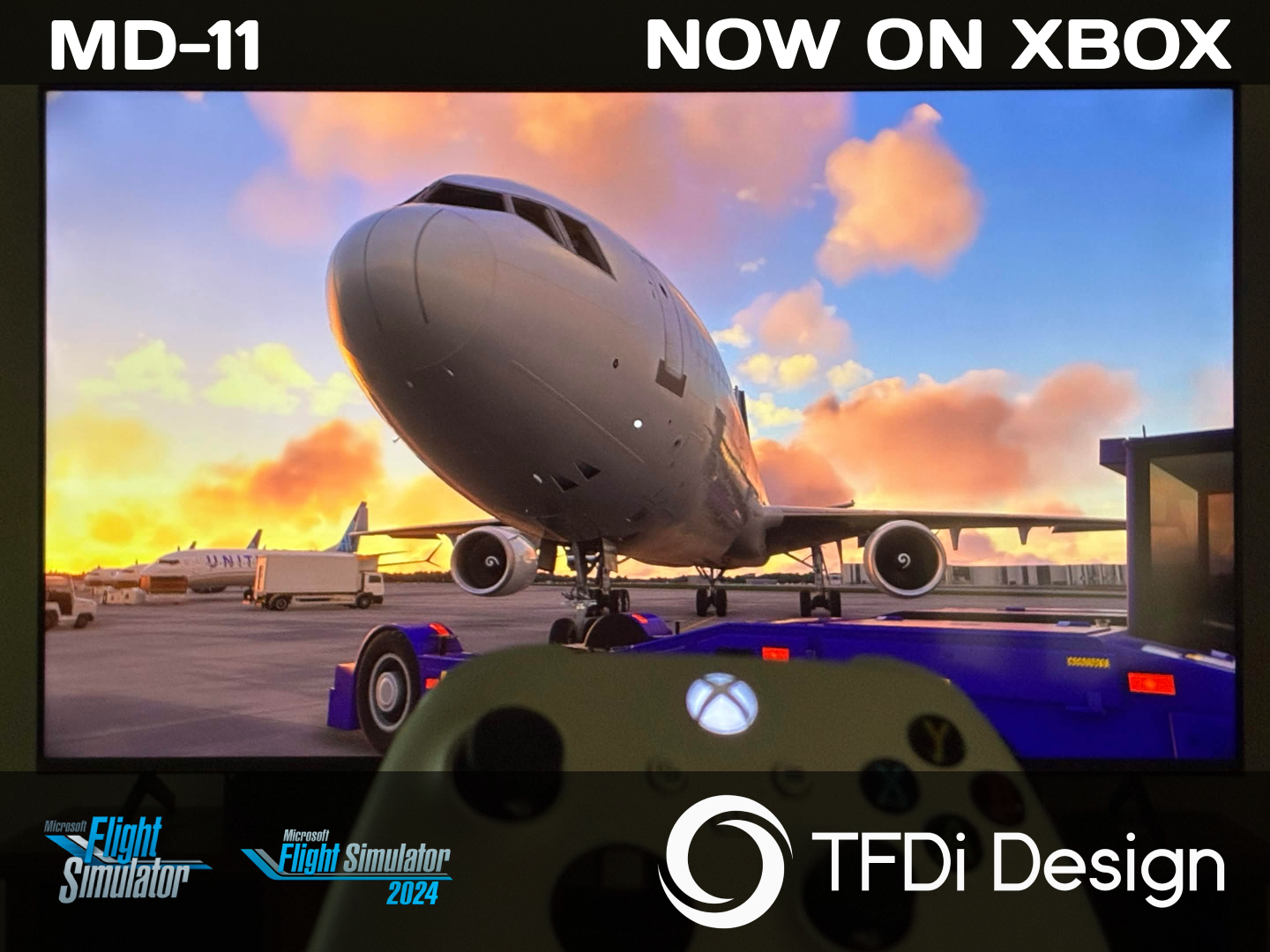
Sky Blue Radio previously examined the distinction between the PC and console editions when the TFDi Design MD-11 arrived on Xbox. The Extended Simulation package remains exclusive to the PC version.
Pilots Can Reset a Damaged Aircraft
The shared system does not force pilots to accept every condition left by a previous crew.
After synchronizing with Tailstrike, pilots can reset the MD-11 to a standard configuration through the aircraft’s electronic flight bag. This prevents an inherited failure or badly configured cockpit from making the aircraft unusable.
To pass the complete state to another pilot, the arriving pilot must park the aircraft and shut down all three engines. The Tailstrike plugin then records the aircraft’s configuration while it is parked.
Pilots should confirm that the state has been saved before ending their lease. Once saved, that configuration becomes the starting point for the next pilot using the same registration.
Aircraft-state persistence has become an increasingly popular feature among serious flight-simulation products. Sky Blue Radio recently covered the FlightFX Hawker 800XP’s persistent systems and maintenance, although the Tailstrike integration differs by sharing the aircraft’s condition among multiple pilots.
Twenty-One MD-11 Airframes Available at Launch
Tailstrike currently has 21 shared MD-11 airframes available on its network.
Tailstrike Supporters can add more real-world MD-11 registrations to the shared fleet. Once added, those aircraft become permanently available for other pilots to lease and operate.
Each registration develops its own location, flight history and aircraft condition. Over time, two MD-11s that began with identical configurations could develop very different histories depending on where they have flown and how their pilots treated them.
Supporters who add an aircraft are permanently recognized on its public profile.
Integration Is Available Free on PC
The Tailstrike MD-11 integration is available now for Microsoft Flight Simulator 2020 and Microsoft Flight Simulator 2024 on PC.
Pilots need a free Tailstrike account, the Tailstrike desktop plugin and a licensed copy of the TFDi Design MD-11. The shared-aircraft integration is available through Tailstrike’s free membership tier.
Pilots who own the TFDi MD-11 can also redeem their product key through Tailstrike for one complimentary month of Tailstrike Supporter membership.
The feature is not currently offered on Xbox, despite the MD-11 itself being available on Microsoft’s consoles.
Complete setup information is available in the official Tailstrike and TFDi MD-11 announcement. Pilots can create an account and download the required plugin through the Tailstrike website.
A Different Kind of Flight-Simulation Community
Tailstrike is not designed as a traditional virtual airline, career mode or in-game economy.
Instead, it provides a shared persistence layer that works alongside a pilot’s preferred aircraft, simulator, network or virtual airline. The focus is on making each aircraft feel like an individual machine with a continuing history rather than a disposable copy that resets after every flight.
The TFDi Design MD-11 is particularly well suited to that idea. Its complex systems, maintenance requirements and Extended Simulation features give each shared airframe the opportunity to develop a recognizable operational personality.
For pilots who enjoy performing complete checklists and treating virtual aircraft like real machines, inheriting the consequences of another crew’s decisions could add an entirely new dimension to the MD-11 experience.
Just remember to leave the cockpit in decent shape. Someone else has to fly that airplane next.