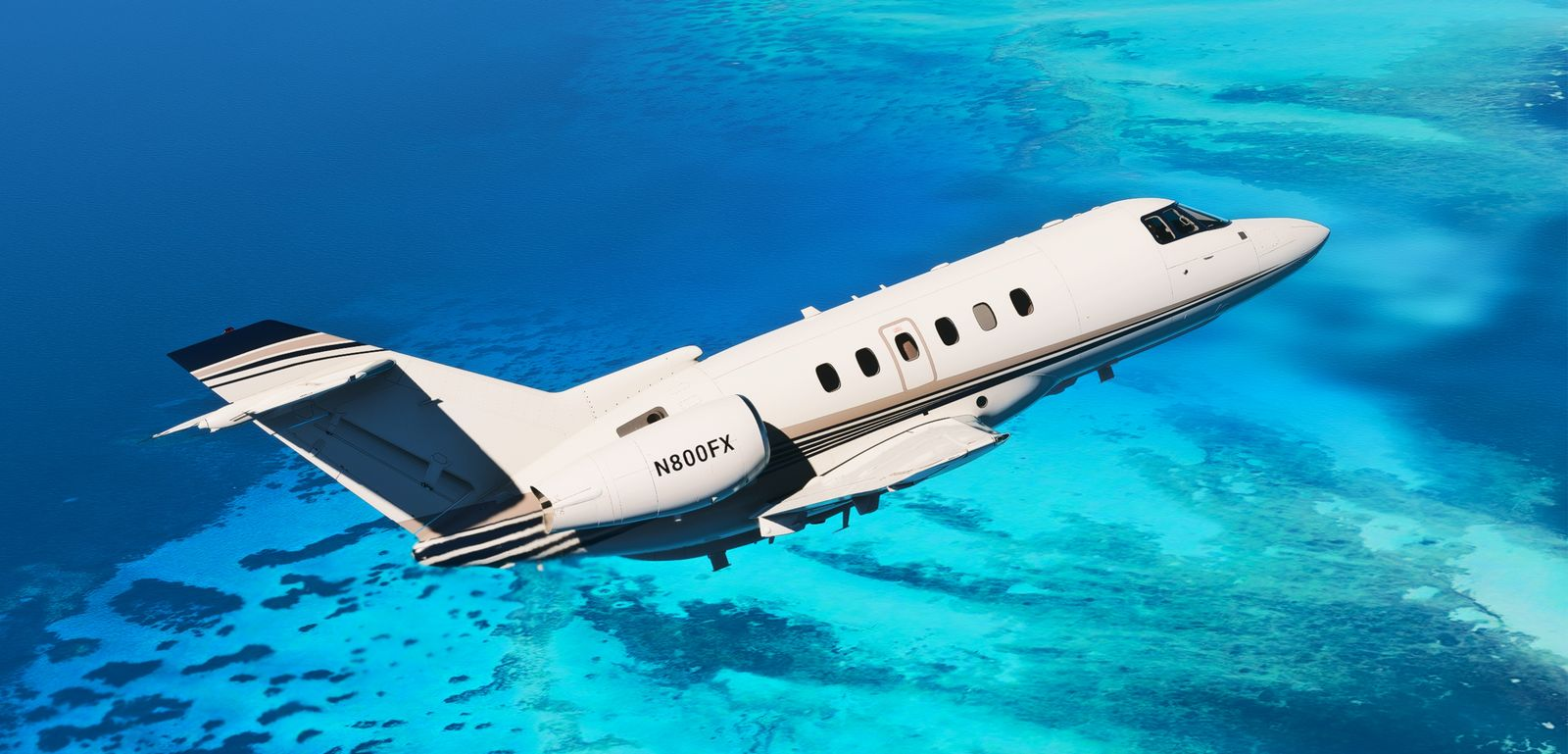


The aircraft was kept largely under wraps until shortly before its release on September 8. Rather than announcing the project years in advance, FlightFX surprised the flight-simulation community with an aircraft that was nearly ready to enter the Microsoft Flight Simulator Marketplace.
A Classic Business Jet Returns
The Hawker 800XP traces its roots to the British-designed de Havilland DH.125, which first flew during the early 1960s. The design evolved through several manufacturers before the Hawker 800XP entered service with more powerful Honeywell TFE731 engines, improved payload capability and updated avionics.
Known for its rugged construction, comfortable cabin and strong short-field performance, the Hawker 800XP became one of the most successful aircraft in the midsize business-jet market.
FlightFX has recreated those characteristics while incorporating a customized version of the Collins Pro Line 21 avionics suite. The flight deck includes aircraft-specific controls, custom flight-management pages, performance calculations, functional weather radar and support for both Navigraph and Microsoft’s LIDO chart service.
Persistent Systems and Maintenance
One of the aircraft’s standout features is its extensive state-persistence system. FlightFX says more than 1,300 aircraft parameters can be saved individually for each airframe.
Switch positions, doors, fuel quantities, hydraulic fluid, oxygen, engine operating time and other conditions can remain exactly as the pilot left them after the previous flight. The aircraft can also accumulate dirt, dust, insects, runway rubber and fluid leaks depending on how and where it is operated.
Components can fail randomly, through improper operation or according to their modeled service life. Pilots can inspect individual systems through engineering diagrams in the aircraft’s electronic flight bag and service consumable items such as hydraulic fluid, oxygen and TKS anti-icing fluid.
The aircraft also includes a customized pressurization system, pneumatic and climate-control modeling, lift-dump operation, rudder bias, stick-shaker and stick-pusher systems.
Integrated Flight Planning and Cabin Features
The Hawker’s electronic flight bag provides SimBrief synchronization, weight-and-balance controls, Navigraph integration, LIDO charts and an interactive aircraft-management system.
Flight plans can be transferred directly to the flight-management system, while imported passenger and cargo information can be used to configure the aircraft’s weight and balance. Ground equipment—including a GPU, fuel truck, wheel chocks and protective covers—can also be managed through the tablet.
An onboard passenger display follows the active flight plan and provides simulated travelers with information including altitude, groundspeed, outside temperature, estimated arrival time and remaining distance.
FlightFX has also included animated passengers, interactive cabin compartments and a detailed sound package recorded by Boris Audio Works.
Built for Pilots Who Want a Challenge
Unlike newer business jets that rely heavily on automation, the Hawker 800XP retains many characteristics of its older design. Its manually operated flight controls, fuel-management requirements, pressurization procedures and unusual TKS anti-icing system promise a more involved experience for virtual pilots.
FlightFX has supported the aircraft with a comprehensive 467-page manual covering its systems, cockpit, performance, flight-management system and operating procedures.
The FlightFX Hawker 800XP is available exclusively through the Microsoft Flight Simulator 2024 Marketplace for $36.99.
For virtual pilots looking for something more demanding than a highly automated modern business jet, the Hawker 800XP appears ready to deliver a hands-on corporate aviation experience with plenty of personality