

The announcement represents a significant step forward for the project, internally known as Project Griffin. According to Vector, the aircraft can now complete an entire gate-to-gate flight, beginning with a cold-and-dark cockpit and continuing through engine shutdown at the destination.
This milestone follows Vector’s detailed Boeing 787-9 development update from FlightSimExpo 2026, which provided an earlier look at the aircraft’s flight deck, systems, Electronic Flight Bag and sound development.
Core Aircraft Systems Now Operational
The current alpha build brings together the major systems required to operate the Dreamliner throughout a complete flight.
These systems currently include:
- Electrical, hydraulic and fuel systems
- Engine simulation
- Autopilot and flight-guidance systems
- Flight Management Computer
- LNAV and VNAV
- Primary Flight Display
- Navigation Display
- Engine Indication and Crew Alerting System
- Aircraft avionics
- Boeing-style Electronic Flight Bag
- Vertical Performance Application Display
While reaching alpha does not mean every system is complete or fully tuned, it allows Vector to test the aircraft as one integrated product across full flights and realistic operating scenarios.
The development team is conducting flights using real-world departure and arrival procedures at airports around the world. Those flights are being used to refine LNAV, VNAV, engine performance, autopilot behavior, flight-guidance logic and other interconnected systems.
Vector says procedures are being tested repeatedly as the team identifies problems, makes adjustments and then flies the scenarios again.
Real 787 Pilots and Mechanics Join Testing
Vector’s internal alpha-testing team includes real-world Boeing 787 pilots, Boeing 787 mechanics, aviation engineers, software developers and other specialists.
Bringing together people from several professional backgrounds allows the aircraft to be evaluated from operational, technical and engineering perspectives—not simply as another flight simulation add-on.
Reaching alpha also means the complete aircraft can now be challenged throughout every major phase of flight. Systems that previously may have been evaluated separately can now be tested together under realistic conditions.
Three Primary Development Areas
Although the aircraft can now complete full flights, considerable work remains before release. Vector says development is continuing across three primary areas.
The first involves testing, tuning and refining the systems already implemented. This includes continued work on LNAV, VNAV, autopilot behavior, engine performance and flight-guidance logic.
The second area includes additional systems and features that are not necessarily required to complete a flight but remain important to the finished aircraft. Planned additions include an Airport Moving Map featuring distinctive Boeing 787 symbology and a functional weather radar.
The third development area covers the aircraft’s visual and audio presentation. Vector continues to improve the cockpit, passenger cabin, cargo compartments and exterior model while integrating custom fonts, animations and sounds recorded specifically for the project.
Detailed Art and Animation Development
Vector says the aircraft’s complete base model has now been built. The art team is concentrating on quality assurance, fine-tuning and optimization throughout the aircraft.
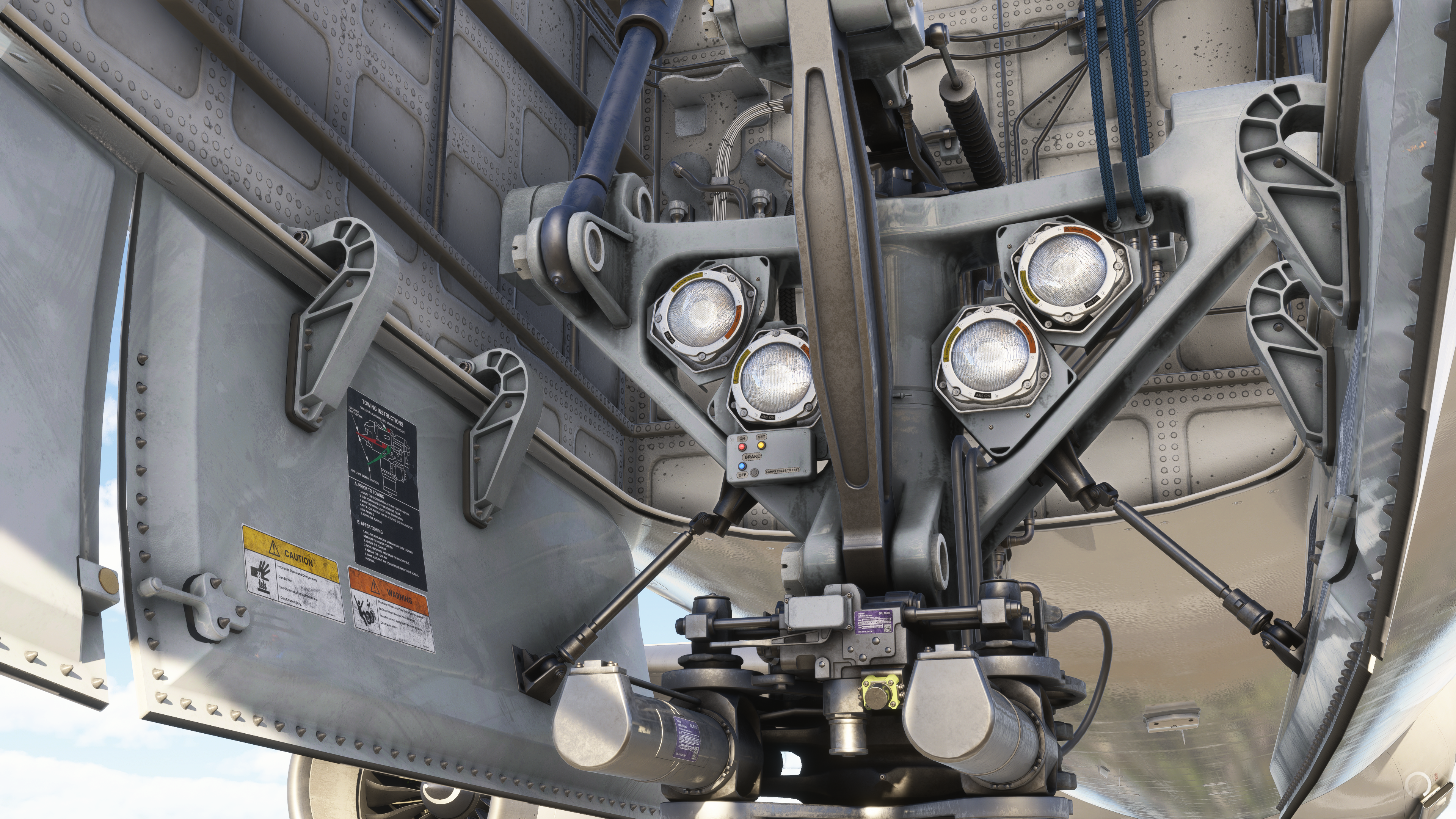
The team continues to review technical drawings, photographs, videos and CAD data to improve individual areas of the model. This work covers everything from the flight deck and passenger cabin to the cargo compartments, landing gear bays and exterior components.
Animation development is also approaching completion. Vector expects the remaining major animations, including the Boeing 787’s distinctive wing flex, to be completed by the middle of August.
The wing-flex animation will reportedly receive its own future development update because the visible movement is only one part of the engineering and simulation work behind the feature.
Dreamliner fans can also review FlightFactor’s latest Boeing 787 development images for X-Plane 12 for another look at a major Boeing 787 project currently under development.
Original Boeing 787 Sound Recordings
Vector has captured an extensive collection of original sounds aboard a real Boeing 787.
The recordings cover multiple phases of flight and were captured from several positions throughout the aircraft. The team has also recorded individual cockpit and cabin controls, including switches, buttons, mechanisms and the broader spatial sound environment.
A substantial amount of that audio has already been incorporated into the alpha build, with additional recording and implementation work continuing alongside visual development.
Performance and Optimization
Performance remains one of Vector’s primary development goals.
Rather than leaving optimization until the aircraft is nearly finished, the developer says performance considerations are being incorporated into every stage of production.
Each component is evaluated based on its visual quality, accuracy and effect on simulator performance. That balance will be particularly important for an aircraft combining a detailed exterior and cabin with numerous complex systems operating in the background.
The VECTOR 787-9 is being developed specifically for Microsoft Flight Simulator 2024. This allows the team to use the simulator’s newer development tools, engine capabilities and optimization methods.
VECTOR Knowledge Center
Vector is also creating a dedicated Knowledge Center designed to help users learn and operate the aircraft.
Pilots who want a quicker experience will still be able to load the aircraft and begin flying without studying every system. However, the Knowledge Center will provide more detailed learning material for users who want to understand the Dreamliner’s systems, procedures and technology.
Vector describes the Knowledge Center as a significant project in its own right. Additional information about the learning platform will be presented in a future development spotlight.
First Full Video Expected This Fall
Vector has not yet released a complete demonstration video of the aircraft.
The developer explained that it wants the aircraft’s visuals, animations and sound environment to meet the standards established for the project before presenting it in full.
Although the aircraft can already complete a full flight, Vector does not want its first major video to simply demonstrate that the 787-9 can fly. The team wants the presentation to represent the expected quality and depth of the finished product.
The first complete video is currently expected during September or October.
Pricing and Release Information
Vector has not announced a final price for the Boeing 787-9.
The developer says the aircraft will be priced within the familiar range for flight simulation add-ons offering a comparable level of system depth and complexity. More detailed pricing information will be provided closer to release.
No precise release date was included in the alpha announcement, although the VECTOR 787-9 continues to be promoted as a 2026 release for Microsoft Flight Simulator 2024.
Entering alpha should not be confused with a nearly finished release build. The aircraft must still undergo extensive testing, refinement and optimization. Nevertheless, the ability to complete full gate-to-gate flights indicates that Project Griffin has moved well beyond the concept and modeling stages.
Additional information and development images are available in Vector’s official Boeing 787-9 alpha announcement.