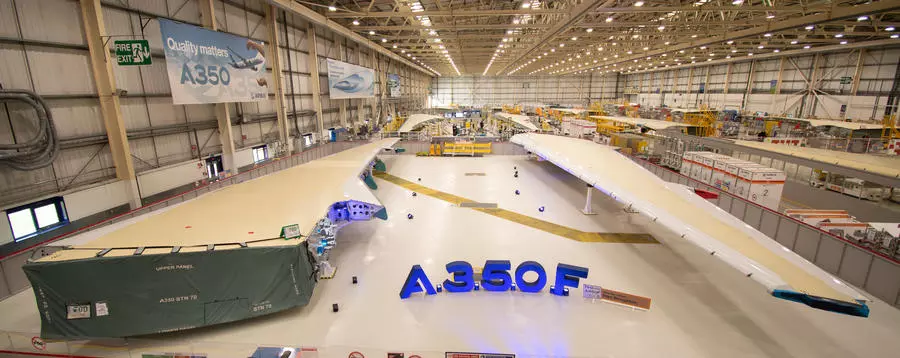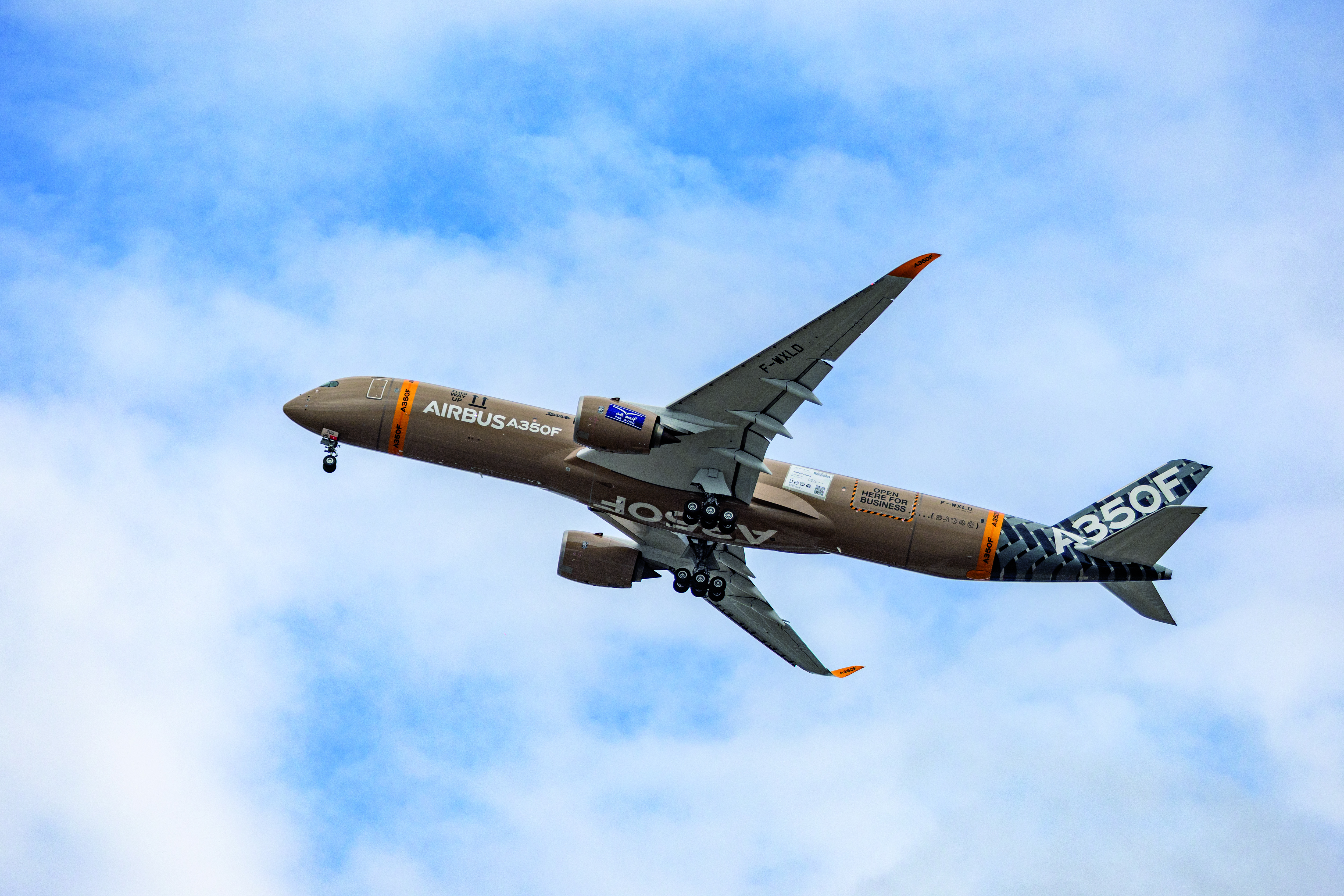


According to Reuters, industry sources say Airbus is targeting a maiden flight toward the end of September 2026, although the schedule could slip into early October. The first flight would launch a critical test campaign ahead of planned certification and customer deliveries.
Airbus itself has confirmed that the A350F’s first flight is planned for later this year, and the manufacturer is already deep into ground testing and final preparation of the first flight-test aircraft.
Airbus Takes Another Run at the Large Freighter Market
The A350F is not simply a passenger A350 with the seats removed.
Airbus designed the aircraft as a dedicated freighter based on the A350 platform, with a fuselage optimized for cargo operations, a reinforced structure and what Airbus says will be the largest main-deck cargo door in its class.
The aircraft is aimed directly at a segment long dominated by Boeing.
Airbus launched the A350F program in 2021 as part of an effort to establish a stronger position in the large freighter market, where Boeing aircraft such as the 777F and converted 747 freighters have played major roles.
Reuters reported that the program has now accumulated 107 orders, a significant jump compared with Airbus’ previous A330F freighter program.
That makes the upcoming maiden flight more than a technical milestone.
It is the point where Airbus’ newest cargo aircraft finally leaves the factory floor and begins proving whether the design can deliver on the promises made to airlines.
Two Aircraft Will Handle the Flight-Test Campaign
Airbus is building two A350F aircraft specifically for flight testing during 2026 and 2027.
Those aircraft will be used to validate handling, systems, performance and certification requirements before customer deliveries begin.
The flight campaign will come after months of ground testing.
Airbus has already been conducting vibration testing and structural work on the first aircraft while preparing key systems associated with cargo handling and the enormous main-deck door.
That Cargo Door Is Enormous
One of the defining features of the A350F is its main-deck cargo door.
Airbus says the opening measures approximately 4.3 meters wide and 3.15 meters high, making it the largest main-deck cargo door in the industry.
The door is mounted toward the rear of the aircraft to help maintain a more favorable center of gravity while cargo is being loaded.
It is constructed from composite materials and uses an electrically powered opening and closing system.
Airbus completed assembly of the first production cargo door in Spain earlier this year before sending it to Toulouse for integration into the first test aircraft.
That sounds like a small detail until you remember what the aircraft is being asked to do.
A freighter is only useful if operators can get very large things into it without first performing an elaborate game of industrial Tetris.
Up to 111 Tonnes of Payload
The A350F is designed to carry a payload of up to 111 tonnes.
Airbus lists its range at approximately 4,700 nautical miles, or about 8,700 kilometers, with maximum payload.
That puts the aircraft squarely into the long-haul cargo market.
The fuselage dimensions have been optimized around standard cargo pallets and containers, while the aircraft retains many of the systems and technologies already proven on the passenger A350 family.
Powered by the Trent XWB-97
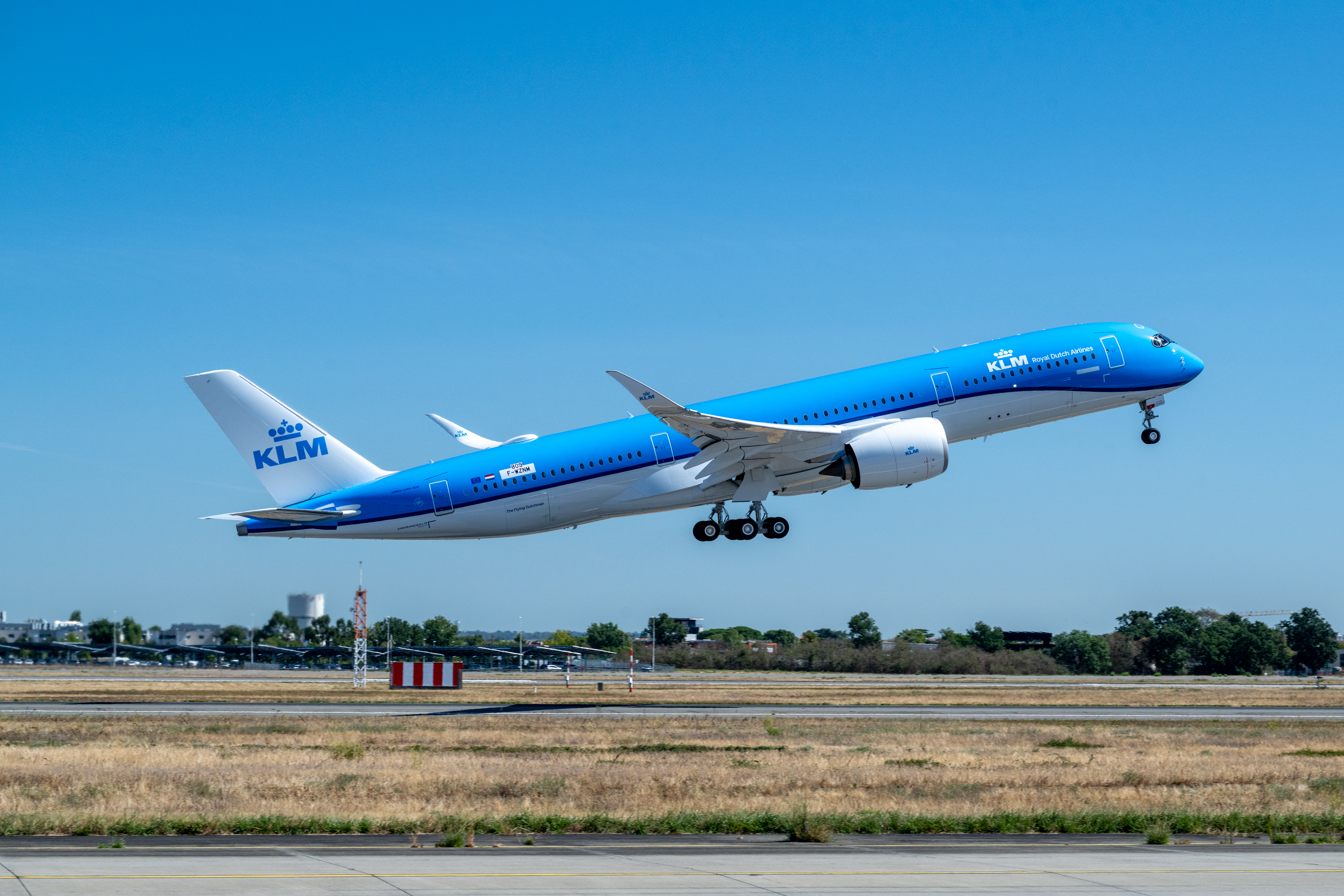
The A350F will use the Rolls-Royce Trent XWB-97, the same engine family used on the A350-1000.
Airbus says the combination of modern engines, advanced aerodynamics and extensive use of lightweight materials should reduce fuel consumption and carbon emissions by around 20 percent compared with previous-generation aircraft offering similar payload and range capability.
More than 70 percent of the aircraft is built using advanced materials such as carbon fiber composites and titanium.
Airbus says that contributes to a takeoff weight about 46 tonnes lighter than a competing derivative freighter.
Built for New Environmental Rules
Airbus has also been emphasizing the A350F’s environmental performance.
The company says the aircraft is the only new large freighter currently designed to fully comply with the latest ICAO carbon-emissions standards.
The aircraft will be capable of operating with up to 50 percent Sustainable Aviation Fuel at entry into service, with Airbus targeting 100 percent SAF capability by 2030 across its aircraft family.
For cargo airlines replacing older 747s, MD-11s and early-generation 777 freighters, those efficiency improvements could become increasingly important as fuel costs and emissions requirements tighten.
Orders Continue to Build
The A350F order book has been growing steadily.
Air China Cargo increased its order to 10 aircraft in May 2026, saying the freighter would help expand its long-haul cargo capacity.
Cathay Group also added two more A350Fs in May, bringing its total commitment to eight aircraft.
Other customers include major cargo operators and airlines looking ahead to the replacement of aging widebody freighters.
Reuters reported that Airbus now has 107 orders for the aircraft, underscoring how much commercial pressure sits behind the upcoming flight-test program.
The Program Has Not Been Without Delays
The A350F has already encountered schedule pressure.
Reuters reported that the aircraft was originally expected to enter service earlier, but development delays have pushed the program back. Issues involving production of the cargo door in Spain were among the factors affecting the timeline.
Airbus is currently targeting first customer delivery in the second half of 2027, although some analysts cited by Reuters believe deliveries could ultimately slip into 2028.
That makes the first flight particularly important.
Every month available for testing and certification matters if Airbus wants to hold onto its current delivery target.
Why the First Flight Matters
A maiden flight is always a highly visible milestone, but the A350F carries more weight than most.
Airbus has spent years trying to establish a stronger presence in the large dedicated-freighter market.
The original A330F saw limited success compared with Boeing’s cargo products.
The A350F is a much more ambitious attempt.
It combines the existing A350 platform with a new fuselage configuration, massive cargo door, dedicated structural changes and updated freight-handling systems while retaining significant commonality with one of Airbus’ most successful long-haul passenger families.
If the September target holds, the first A350F could be airborne within weeks.
And when it does fly, Airbus will finally move from building its next-generation freighter to proving it.
That is when the real test begins.