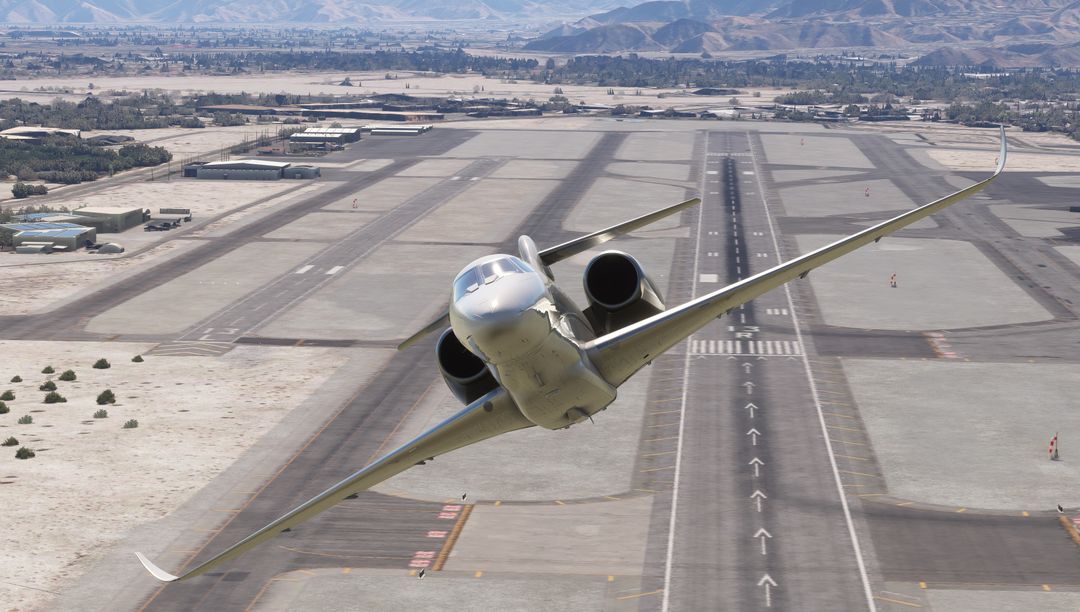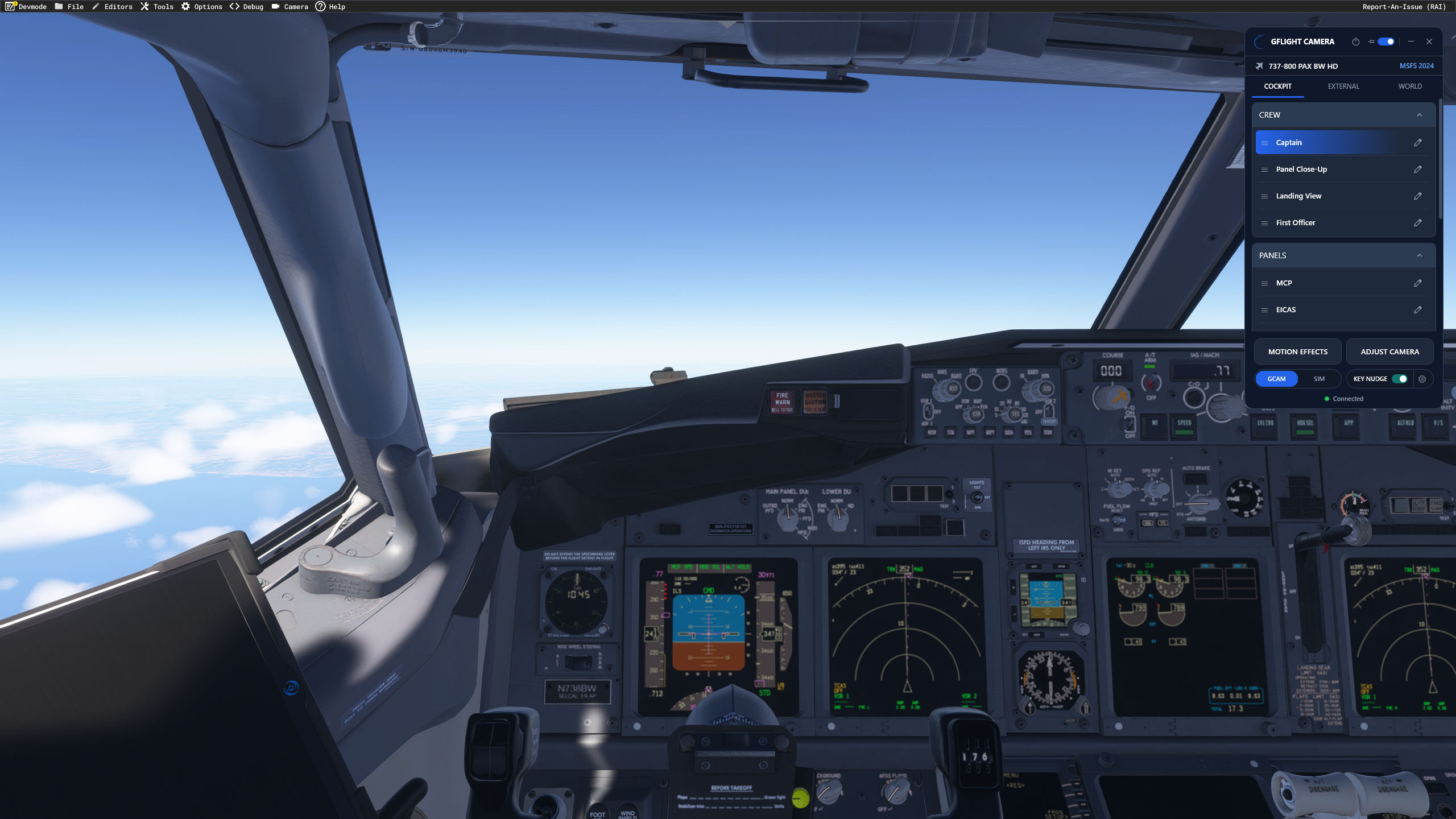


Version 2.1.4 is now available for Microsoft Flight Simulator 2024, and the update represents far more than a collection of bug fixes. FlightFX has reworked several of the aircraft’s core systems, including its P2000 navigation logic, autothrottle, performance prediction, missed approach handling and Electronic Flight Bag.
The update also marks an important transition for the aircraft. FlightFX says MSFS 2024 will become the primary platform for future Citation X development, while the MSFS 2020 edition is expected to receive one final backport of compatible improvements before moving into maintenance-only support.
A Major Navigation System Rework
At the heart of the Citation X V2 update is an overhaul of the aircraft’s P2000 lateral navigation computer.
FlightFX says the work addresses missed waypoint sequencing, synchronization problems between instruments and intermittent Direct-To issues. The revised system is also intended to improve overall FMS navigation accuracy.
The pilot and copilot bearing displays now operate independently and correctly follow their individual selector positions.
Flight-plan pages also receive more useful timing information, including estimated time en route, estimated time of arrival and the Zulu time at which previously flown waypoints were crossed.
Automatic NAV tuning has been improved as well, with the system now handling ILS frequencies more reliably while avoiding overwriting frequencies manually entered by the pilot.
Full Missed Approach Support Arrives
One of the biggest new features is full missed approach support in the FMC.
Published missed approach procedures are now loaded as part of the arrival and can be armed using either the MISSED APPR function or TOGA.
That fills an important gap for pilots flying realistic IFR procedures.
Instead of improvising after a go-around, the aircraft can now follow the published missed procedure as part of the programmed flight plan.
For anyone flying online with ATC or recreating real-world business aviation operations, that is a meaningful upgrade.
Advisory VNAV Gets Smarter
FlightFX has also expanded the Citation X’s vertical navigation capabilities.
The FMS can now generate Advisory VNAV altitude predictions for waypoints that do not contain published altitude constraints. Those predictions are synchronized with the Vertical Situation Display.
The idea is to give pilots a clearer picture of the aircraft’s expected vertical path even when the procedure itself does not specify every altitude.
That should make descent planning more predictable and reduce the need to mentally reverse-engineer the profile while hurtling along at Citation X speeds.
Performance Predictions Now Use Real Citation X Data
Another major change involves the aircraft’s performance calculations.
FlightFX says its flight-performance prediction system has been rebuilt using real Citation X performance data.
Fuel remaining and ETA predictions are now calculated for every waypoint in the active flight plan.
Those predictions take into account:
- Cruise winds
- Winds at individual waypoints
- Temperature
- Aircraft weight
- ISA deviation
- Ambient conditions
The goal is to make fuel and arrival predictions behave more like an actual business jet planning system rather than a basic distance-and-time calculator.
A New PERF PLAN Page
The FMC also receives a new PERF PLAN page powered by the updated performance model.
Pilots can use the page for takeoff and landing performance calculations, V-speeds and live destination predictions.
SimBrief wind data can be imported directly into those calculations.
Cruise winds can also be entered manually, allowing users to see how expected atmospheric conditions affect performance.
FlightFX has additionally changed the PERF INIT transition altitude entry so pilots enter the value in feet rather than flight levels.
V-speeds can now be manually edited through the MFD as well.
Autothrottle Gets a Significant Rewrite
The Citation X’s autothrottle has also been substantially revised.
FlightFX describes the new system as more predictive and less reactive, with smoother operation and fewer abrupt responses to short-term speed changes.
The update improves coordination between the autothrottle and Flight Level Change mode, along with better speed protection during the initial climb.
Descent-rate control during FLC descent has also been refined.
One particularly welcome fix addresses a bug that could cause the autothrottle to command reverse thrust while the aircraft was on the ground or in a cold-and-dark state.
That is probably one feature nobody was hoping would become part of the startup checklist.
GPWS and EGPWS Are Now Included
The Citation X V2 now includes both GPWS and EGPWS functionality.
The update also improves altitude callouts and integrates the terrain-warning functionality more completely into the aircraft’s warning environment.
That is particularly useful for a jet capable of operating at more than Mach 0.9, where things tend to arrive on the windshield with considerable enthusiasm.
Weather Radar Improvements
Weather radar receives new functionality as well.
Pilots now have access to manual and automatic radar tilt, while FlightFX has corrected radar display colors.
The PFD also gains an HSI ARC mode capable of displaying a weather radar overlay.
Additional display improvements include a DME readout, VOR/DME status information and a missing second page for the MFD menu.
Career Mode Support Gets Serious
For MSFS 2024 users, Career Mode integration is another significant part of V2.
The aircraft has been moved to a fully modular setup and is now compatible with the simulator’s VIP Transport specialization.
That makes the Citation X a natural fit for virtual executive and charter operations.
Rather than simply flying the aircraft in Free Flight, users can now put it to work hauling imaginary executives who will presumably still complain about the catering.
Native MSFS 2024 Walkaround Support
FlightFX has also implemented native MSFS 2024 walkaround functionality.
Pilots can interact with:
- Covers
- Chocks
- Ground power equipment
- Doors
- Preflight items
The walkaround elements are Career Mode compatible, meaning the aircraft can take fuller advantage of MSFS 2024’s preflight mechanics.
Preflight clickspot timing has also been improved.
New Inertial Immersion System
One of the more unusual additions is what FlightFX calls the Inertial Immersion System.
This custom system creates body and seat movement effects based on aircraft motion.
It can simulate sensations associated with:
- Turbulence
- Windshear
- Touchdown
- Stall buffet
- Ground roll
- Dirty air
- High-G maneuvers
- General rattles, shakes and vibration
The intensity can be configured through the EFB.
The aircraft’s new wing-flex model is connected to this system, allowing the wings to react dynamically to the same forces.
Custom Wing Flex Comes to the Citation X
Wing flex has been rebuilt around spring-physics properties.
FlightFX says the system is specifically tuned to reproduce the Citation X’s relatively stiff, short wings rather than giving the aircraft exaggerated airliner-style flex.
The wings respond to aircraft movement, turbulence and aerodynamic forces in real time.
That might sound like a mostly visual feature, but on an aircraft known for its distinctive swept wing and high-speed performance, getting the movement right helps sell the entire simulation.
Engine and Thrust Logic Receive More Work
FlightFX has reworked reverse-thrust logic and updated its custom FADEC behavior.
Throttle commands can now operate continuously between the CRZ, CLB and TO detents rather than jumping between fixed values.
The spoiler drag model has also been reduced after FlightFX determined it was too powerful.
Those changes should affect both aircraft handling and the feel of speed-management during descent and landing.
The EFB Becomes More Integrated
The Citation X’s EFB has also received substantial work.
The aircraft now supports Microsoft’s native LIDO charts, while the moving map offers OpenStreetMap and satellite views.
The map, FMC and SimBrief functions are more tightly synchronized.
Weight and balance has also been improved, including native MSFS 2024 passenger avatar loading and unloading.
FlightFX has streamlined SimBrief integration so users do not have to repeatedly enter pilot IDs or redundant login details.
Visual Optimization Replaces the Lite Versions
The developer has also made substantial visual and performance changes.
FlightFX has retired the previous Lite variants and replaced them with a single optimized model using improved Levels of Detail.
Textures, artwork and geometry have been optimized.
MSFS 2024-specific windshield scratches and iridescence effects have been added.
FlightFX also corrected visual problems including rain appearing on interior window surfaces, floating geometry around the wing and livery clipping.
Cockpit lighting has been retuned, and missing animations and VR yoke interactions have been addressed.
Sounds React to Aircraft Movement
The Citation X already included an extensive custom sound package recorded from the real aircraft.
V2 expands that system with dynamic cockpit sounds tied to aircraft movement and the new Inertial Immersion System.
FlightFX says the aircraft includes recordings of real:
- Engines
- APU
- Mechanical systems
- Rain
- Wind
- Warnings
- Doors
- Ground roll
- Switches
- Buttons
- Chimes
- Cabin interactions
The result is intended to make the cockpit sound different depending on what the aircraft is actually experiencing.
Still the Speed Machine
Underneath all these changes remains the reason the Citation X has always attracted attention.
It is very fast.
FlightFX lists the aircraft with a maximum cruise speed of Mach 0.92, a range of approximately 3,460 nautical miles, and a service ceiling of 51,000 feet.
The aircraft uses two Rolls-Royce AE3007C1 engines and carries up to nine passengers.
That performance gives it an unusually entertaining niche in flight simulation.
It provides many of the systems and procedures of a larger corporate jet without requiring an entire afternoon to cross a continent.
MSFS 2024 Becomes the Future
Perhaps the most consequential part of the announcement is not found in the aircraft itself.
FlightFX says the increasing differences between MSFS 2020 and 2024 have made maintaining full feature parity difficult.
The developer therefore plans to backport as many compatible fixes and improvements from the latest update as reasonably possible to the MSFS 2020 version.
That will be the final planned feature update for MSFS 2020.
Afterward, the older version will move into maintenance-only support, meaning critical fixes may continue but new features will be developed specifically for MSFS 2024.
FlightFX is not removing the MSFS 2020 aircraft.
But the direction is clear.
The Citation X has begun moving on.
Available Now
Citation X V2.1.4 is available now through the Microsoft Flight Simulator 2024 Marketplace for existing owners.
FlightFX’s official website now presents the aircraft as the Cessna Citation X V2 for MSFS 2024, highlighting the redesigned avionics, improved autothrottle, performance prediction, missed approaches, wing flex and Inertial Immersion System.
For existing Citation X pilots, this is one of those updates where the version number does not really communicate the scale of what changed.
Navigation was rebuilt.
Performance prediction was rebuilt.
Autothrottle behavior was rebuilt.
MSFS 2024 integration expanded significantly.
And the aircraft now has a clearly defined development path going forward.
FlightFX has not simply polished the Citation X.
It has effectively drawn a line between its first generation and what comes next.