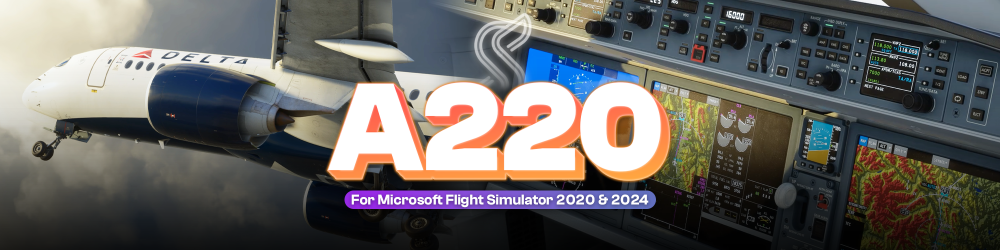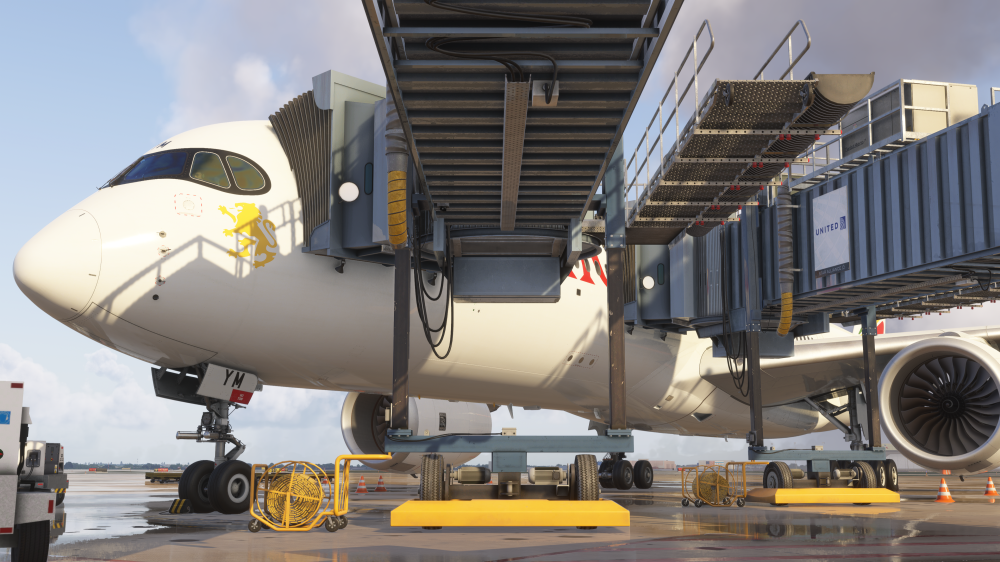


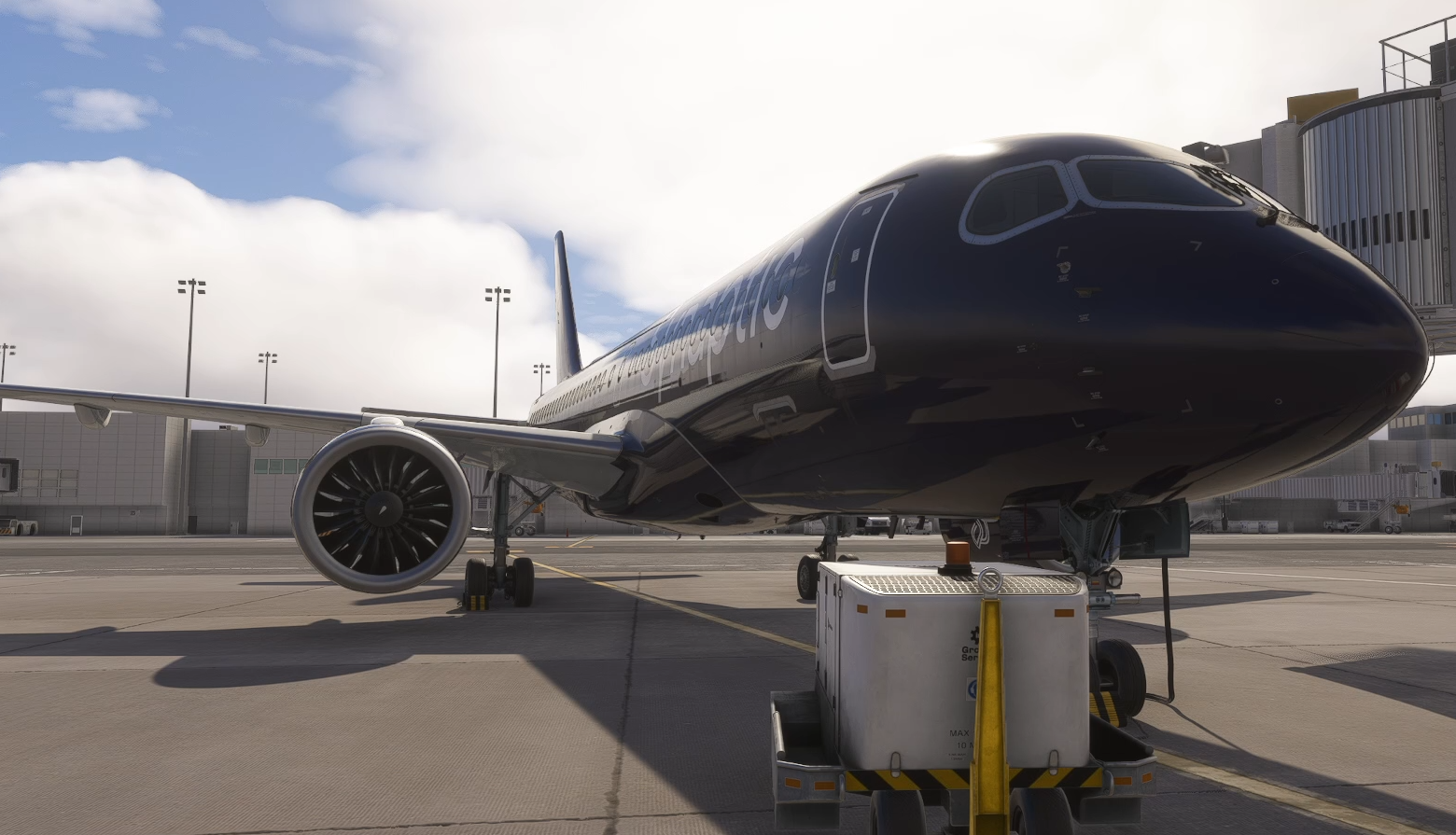
A special three-hour pre-release stream hosted by Harsh311 on Twitch gave flight simmers an extended look at the upcoming A220 for Microsoft Flight Simulator. The broadcast featured members of the Synaptic Simulations team along with EdwardThePilot, a real-world A220 pilot with approximately 3,000 hours in the aircraft who has assisted the project as a technical provider and tester.
This was not simply another cinematic trailer filled with dramatic music and carefully selected camera angles. The stream offered a much more useful look at how the aircraft behaves during normal operations and how closely Synaptic has recreated the unusual personality of the real A220.
Built Around the Real Aircraft
One of the biggest takeaways from the stream was the attention paid to operational authenticity. Edward’s real-world experience allowed viewers to see the simulation through the eyes of someone who regularly operates the aircraft—not merely someone who has read the manual and discovered where the autopilot button lives.
The A220 is an interesting machine because it does not feel exactly like a traditional Airbus. Originally developed as the Bombardier CSeries, it combines design ideas that may remind pilots of an Airbus, Boeing, Embraer, CRJ and even the A350 or 787. That mixed heritage is reflected throughout the flight deck, particularly in its Rockwell Collins Pro Line Fusion avionics and unique flight-control logic.
During the stream, the aircraft demonstrated the polished cockpit workflow, detailed system indications and avionics behavior that have made this one of the most anticipated airliner releases for Microsoft Flight Simulator.
A Seriously Capable Flight Management System
Synaptic has completely rebuilt the aircraft’s flight management system, reportedly creating more than 21,000 lines of code for the new implementation.
The system includes lateral and vertical navigation, performance planning, configurable holds, path offsets, vertical direct-to capability and graphical flight-plan editing. Pilots can interact with waypoints directly on the navigation display to perform reroutes, insert holds, activate direct-to commands and add nearby fixes.
Performance calculations include FLEX takeoffs, takeoff and climb derates, flap extension and retraction speeds, noise-abatement departure profiles and configurable climb, cruise and descent speeds. SimBrief wind information can also be incorporated into the aircraft’s predictions.
Rather than presenting a generic flight-management interface wearing an A220 costume, Synaptic has even recreated some of the real system’s limitations and odd habits. That includes flight-plan leg and hold limits, approach-status behavior and the warnings pilots would encounter when pushing the system beyond those boundaries.
Deep Systems Behind the Displays
The attractive cockpit displays are only the visible portion of a much deeper simulation.
Synaptic has modeled electrical, hydraulic, fuel and environmental systems that interact dynamically. Hydraulic fluid, fuel and battery temperatures respond to aircraft operation, electrical demand and environmental conditions. The developers have even simulated heat transfer between the hydraulic system and fuel.
When hydraulic pressure is removed, control surfaces can respond to gravity and wind instead of remaining unnaturally frozen in place. Display indications are also filtered to reproduce the slight delays and smooth movements found in the actual aircraft.
These are details many pilots may never consciously notice. However, they help create the impression that the virtual aircraft is functioning as a connected machine rather than a collection of animated switches.
The A220 Sound Is Along for the Ride
Of course, it would not be an A220 without its famous “whale” sound.
Working with Echo 19, the team has recreated the distinctive howl produced as the Pratt & Whitney PW1500G geared-turbofan engines accelerate through approximately 30 percent N1. Instead of relying on a simple sound clip that plays at a predetermined moment, the effect is generated procedurally using live engine data.
The engine sounds, cockpit warnings, environmental audio and other aircraft noises contribute significantly to the experience. If your neighbors were wondering why a metallic whale had moved into the computer room, now they know.
Approaches, Autoland and Emergency Descent
The aircraft supports an extensive collection of approach types, including ILS, localizer, LDA, RNAV RNP, RNP AR, LPV, VOR and VOR/DME procedures.
Full autoland capability has also been implemented, including the expected RETARD, ALIGN, FLARE and ROLLOUT mode transitions. The guidance system can recognize when conditions are unsuitable for autoland and revert to the appropriate lower-capability approach mode.
Emergency Descent Mode is included as well. If the aircraft experiences excessive cabin altitude while flying above 25,000 feet, the system can automatically initiate a descent toward 15,000 feet. Despite the abbreviation “EDM,” this particular mode does not activate flashing lights and electronic dance music in the cockpit.
Probably for the best.
What Will Not Be Included at Launch
While the A220 is shaping up to be an impressively complete aircraft, two expected features are not planned for the initial release: CPDLC and weather radar.
Synaptic has emphasized depth and accuracy throughout development, but these systems will require additional work. Their absence may disappoint pilots who regularly fly online or operate in challenging weather, although neither feature overshadows the amount of functionality already included.
Release Is Finally Close
The Synaptic Simulations A220 is expected to launch for both Microsoft Flight Simulator 2020 and Microsoft Flight Simulator 2024. The initial release will feature the A220-300, with the shorter A220-100 planned as a free future addition.
The aircraft is scheduled to arrive first through the Microsoft Flight Simulator Marketplace. At the time of writing, final regional pricing and an exact release time have not been formally confirmed.
Following the Harsh311 stream, however, one thing appears clear: the A220 is no longer a distant development project occasionally appearing in screenshots. It is a functioning, sophisticated airliner simulation being operated publicly by content creators, developers and a highly experienced real-world A220 pilot.
For flight simmers who have waited years to place a high-fidelity A220 in their virtual hangars, that wait appears to be measured in days rather than months.
Watch the complete pre-release presentation on the Harsh311 Twitch channel, and stay with Sky Blue Radio for the latest release information, flight simulation news and aviation coverage.
AdvertisementYour Advert HereAdvertise with us →